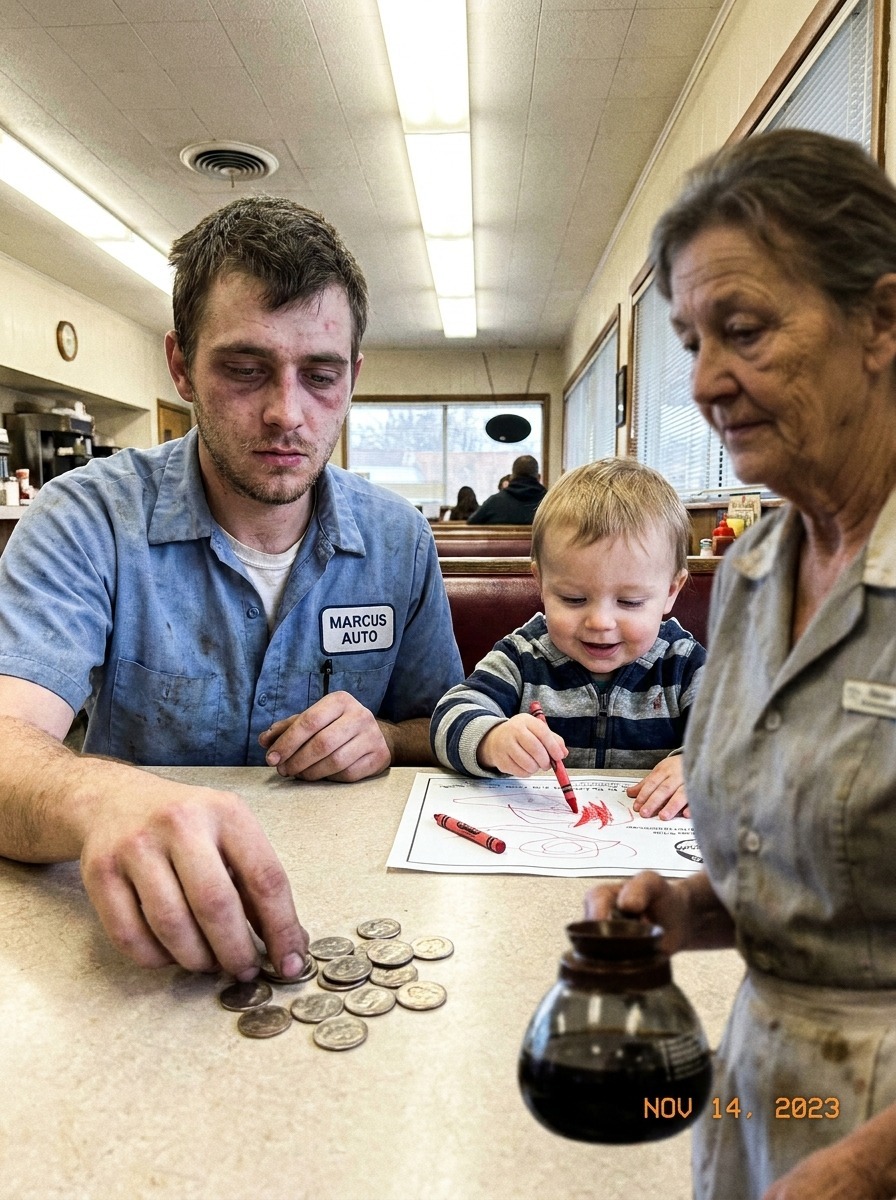
At nine, three families came in because they had read about the board.
At ten, a woman used a meal note for the first time.
She came in wearing a grocery store uniform, her feet swollen in black sneakers.
She stood near the register pretending to study the pie menu.
I knew that look.
It was the look of someone deciding whether hunger was stronger than shame.
I walked over and said, “Evening, hon. Long shift?”
She nodded.
“Very.”
I pointed to the board like it was nothing special.
“We’ve got a few meals already covered tonight. Help yourself if one fits.”
Her eyes moved over the notes.
She reached out slowly and touched one that said, One bowl of chicken noodle soup and toast.
“Do I need to sign something?”
“Nope.”
“Do I have to explain?”
“Nope.”
She took the note down with trembling fingers.
“I’ll pay it back Friday.”
“Or don’t,” I said. “Maybe someday you’ll pay it forward. Maybe not. Either way, soup’s coming.”
She sat in the corner booth and cried quietly into her napkin when the bowl arrived.
Nobody stared.
Nobody clapped.
Nobody filmed.
That was the point.
By midnight, three more notes were gone.
By one, four new ones had appeared.
The board had become a living thing.
Breathing in need.
Breathing out mercy.
And still, Marcus did not return.
Not that night.
Not the next.
Not the night after that.
A week passed.
Then another.
The pancake story faded from the town board.
The meal board stayed.
People began calling it the dignity board.
I hated the name at first because it sounded too polished, like something a committee would put on a pamphlet.
But the name stuck.
And maybe it fit.
Because dignity was what it protected.
Not hunger.
Hunger was only the visible wound.
Dignity was the deeper one.
Three weeks after Marcus came in with his dimes, the first argument happened.
It was a Friday lunch rush.
A man in a pressed jacket came in with two other men I didn’t recognize.