The Harrington empire began to wobble not long after that.
I didn’t learn about it from news headlines. The Harringtons didn’t make the news unless they wanted to. They built their reputation the way they built everything—quietly, behind closed doors, with just enough philanthropy to look benevolent.
But money leaves footprints, and desperation leaves even deeper ones.
Edward’s first email arrived through my lawyer.
It was written in careful corporate language, the kind that pretends nothing emotional is happening.
We would like to discuss a potential investment opportunity. Confidential. Time-sensitive.
Ten million dollars.
That number sat on the page like a dare.
My lawyer called me immediately.
“They’re asking,” he said, tone clipped, “for an infusion to stabilize a deal. They need liquidity.”
“Why?” I asked, already knowing.
My lawyer exhaled. “Because without Oliver, their leverage is weaker,” he said. “And because they miscalculated.”
“Miscalculated what?” I asked, though I knew.
My lawyer paused. “You,” he said.
I sat at my tiny kitchen table and looked at the framed letter on the wall—Edward’s request that I stop using the Harrington name.
They had tried to erase me.
Now they were asking for ten million dollars.
I laughed once, quiet and sharp.
“Tell them we’ll meet,” I said.
My lawyer hesitated. “Are you sure?”
“Yes,” I said calmly. “I want to see their faces when they realize.”
We met at an upscale restaurant downtown—white tablecloths, low lighting, the kind of place where people spoke softly because they believed money required reverence.
My lawyer sat beside me, folder on the table. I wore simple clothes—nothing flashy, nothing designed to impress. I didn’t need to. The power wasn’t in my outfit. It was in what I knew and what they didn’t.
Edward arrived first. He looked tired but composed, the way men look when they’re losing control but still pretending they aren’t.
Margaret followed, dressed impeccably, chin lifted. Lydia came last, filming on her phone until a host asked her to stop.
Their eyes landed on me and froze.
Margaret went pale.
For a split second, the room went silent in a way that felt almost theatrical.
My lawyer stood and shook Edward’s hand. Margaret didn’t move. Lydia’s face tightened, the performative smirk flickering.
“You,” Margaret said, voice thin with shock. “Why are you here?”
I smiled politely. “Because you asked for my money,” I said.
Edward’s jaw tightened. “We asked for an investor,” he corrected automatically.
My lawyer opened the folder. “You asked for ten million dollars,” he said calmly. “And you requested confidentiality. We can provide both.”
Margaret blinked rapidly, trying to regain control. Then her expression sharpened into something like indignation.
“This is—” she started.
My lawyer held up a hand. “Before we discuss terms,” he said, “it’s important you understand the structure of Mr. Oliver Harrington’s estate.”
Lydia scoffed. “We know the estate,” she snapped. “It belongs to the family.”
My lawyer’s voice stayed calm. “Actually,” he said, “it belongs to his wife.”
Margaret’s mouth opened.
Edward’s face drained.
Lydia laughed—too loud, too forced. “That’s not funny,” she said.
“It’s not meant to be,” my lawyer replied. He slid a document across the table.
My name.
Sole heir.
Sale proceeds.
Four hundred and eighty million dollars after taxes.
Trust structures.
Finality.
The kind of legal clarity that leaves no room for Margaret’s charm or Lydia’s performance.
Shock rippled through the table.
Margaret’s hands trembled slightly. Edward stared at the papers like they were written in a language he couldn’t read. Lydia’s face went rigid, eyes flashing like a camera shutter.
Margaret recovered first, because people like Margaret always recover first. They are trained to turn humiliation into offense.
She straightened, lifted her chin, and put on the voice she used when she wanted to make morality sound like a weapon.
“Family supports family,” she said.
I looked at her calmly.
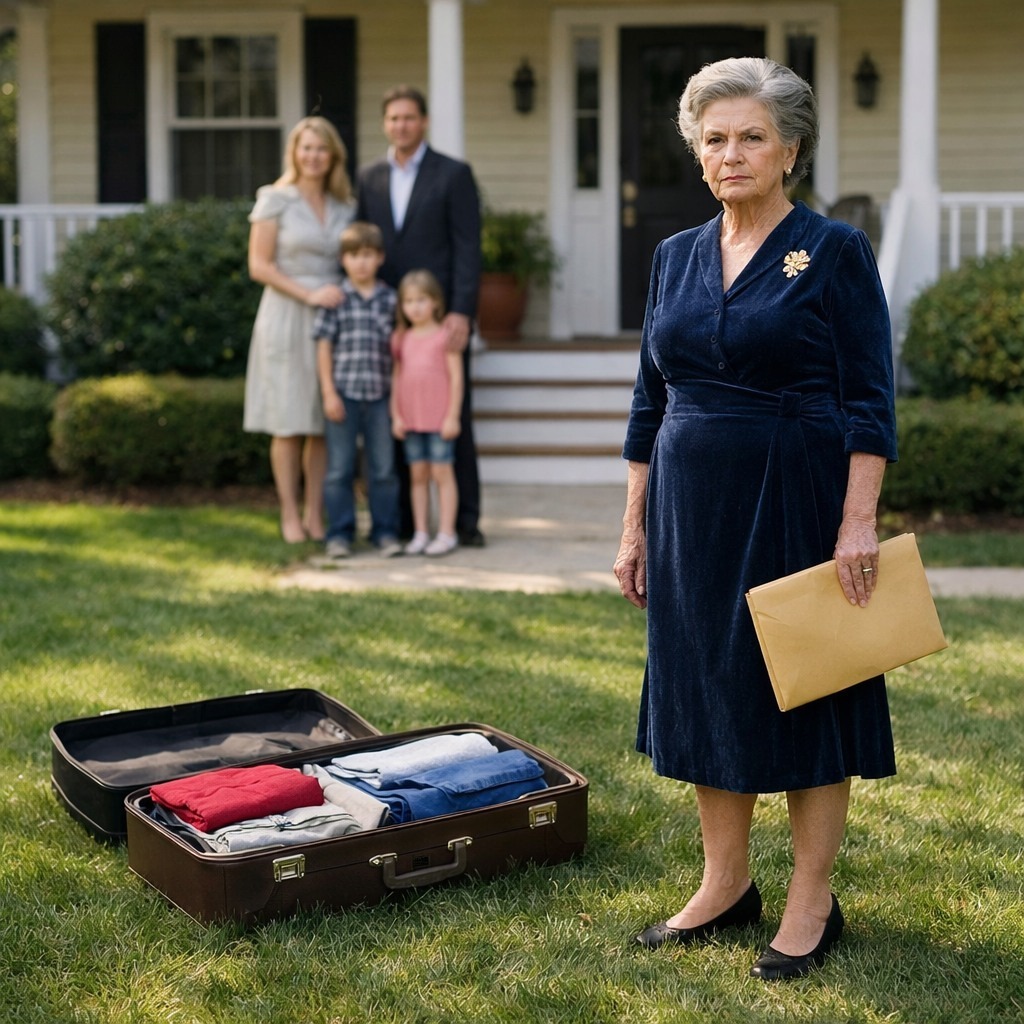
“You evicted me,” I replied.