“What’s this?” he asked.
“A gift,” I said. “Or a mirror, depending how you read it.”
He glanced at the title again, then turned it over.
His brow furrowed at the author’s initials.
N.C.
He looked at me.
“You wrote this?”
I nodded.
“It’s an internal Lantern publication—for our partners, and the interns. People who were told their voice didn’t matter. Turns out it does.”
He held the book like it might burn him.
“Why give it to me?”
“Because I built something from nothing. From all the things you said weren’t enough. I just thought you should see the blueprint.”
I stood before he could answer, tossed a few bills on the table to cover our drinks.
“Nina,” he said quietly.
I paused.
“Are you happy?”
It was the first real question he’d asked me in years.
I turned back, met his eyes.
“I’m whole,” I said.
And I left.
The parking lot shimmered in the sun.
I slid into my car, hands resting on the wheel, and stared ahead as if the road might speak first.
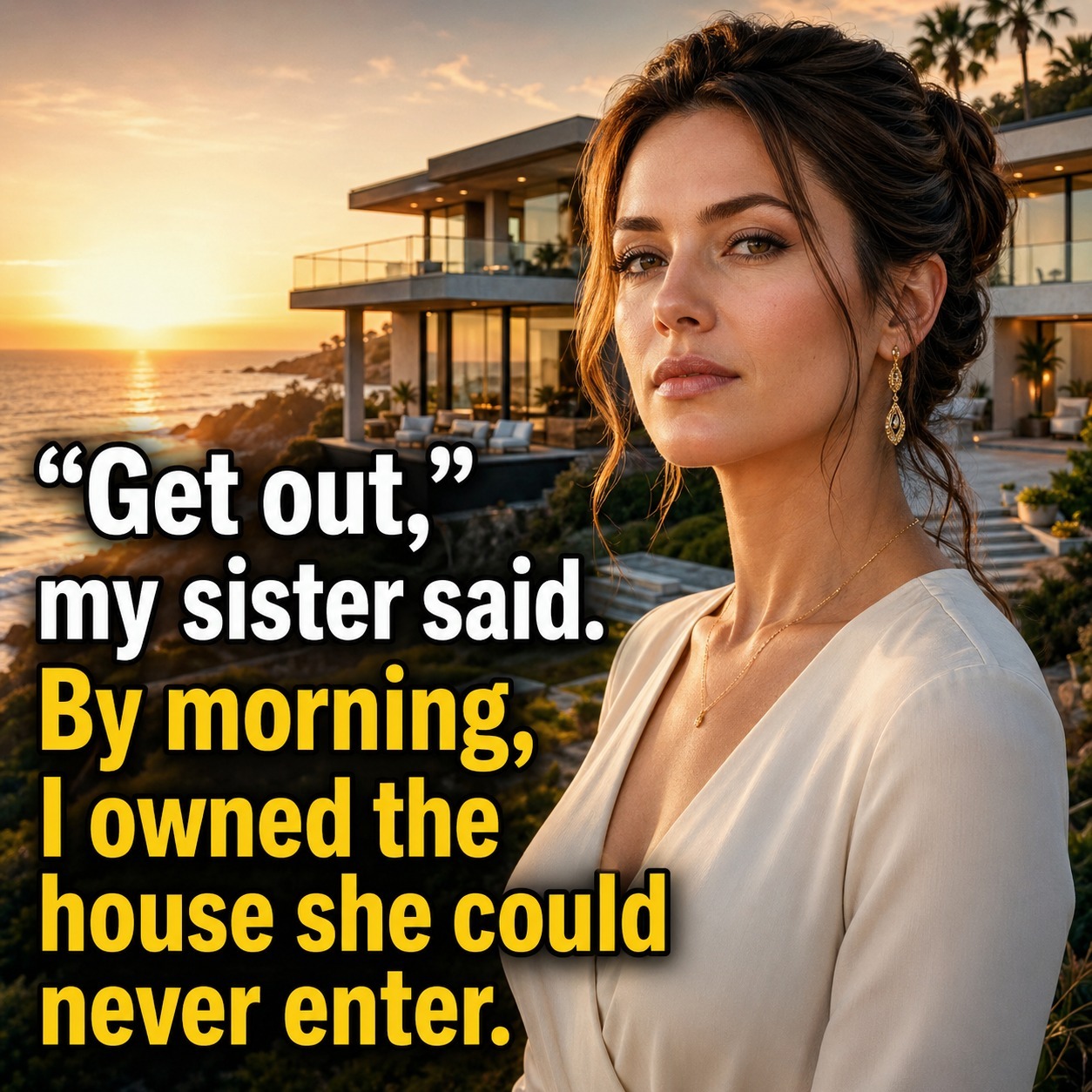
Back at the house, the waves crashed like clockwork—soft rhythm against the shore that didn’t care about apologies or titles or second chances.
Later that night, when I checked the mail, I found a small envelope tucked beneath an ad circular.
My name was scrawled in neat but slightly crooked cursive.
Inside was a birthday card—a simple one, balloons on the front, the kind you grab last minute at a gas station.
Happy Birthday, Neva, it read.
He had misspelled my name.
I stared at it for a moment.
Not angry.
Not surprised.
Just tired.
I folded it shut, walked into my study, and opened the bottom drawer of the filing cabinet.
I placed the card under the title deed for the house—two signatures.
One from a man who never saw me.
And one from the woman I had become in spite of him.
The letter arrived folded in a heavy cream envelope.
My name written in cursive so familiar it felt like muscle memory.
No return address, but I knew the handwriting.
My mother’s slant always leaned a bit too far to the right, like her words couldn’t wait to rush past consequence.
It came on a Thursday, tucked between a utilities bill and an invitation to a local gala I had no intention of attending.
I carried it upstairs, still sealed, laid it on my kitchen counter, and stared at it while the kettle hissed behind me.
I didn’t open it right away.
I let it sit for three days.
Not because I was afraid of what it might say, but because I already knew.
The rhythm of her justifications had never changed, even when the notes were dressed up in paper nicer than anything I’d ever received on my birthdays growing up.
On Sunday morning, I finally slid my finger under the flap.
The letter was five pages long, written in blue ink on monogrammed stationery.
I read it all in one sitting at the dining table, the ocean humming in the background through the open windows.
She began with a story I had heard before—about how hard it had been in the early years.
About sacrifices.
About how she and my father had “done their best” with what they had.
She spoke of tight budgets, lost opportunities, how everything had gone to Samantha’s private school because she “needed more support, more structure.”
How I had always been the strong one.
The independent one.
That word again.
Independent.
The elegant way to say overlooked.
She wrote about the media attention, how hard it had been for the family to see their name tangled in public embarrassment, how confusing it was for my sister, how hurtful.
Not once did she write the words “I’m sorry.”
Toward the end, she asked me to consider reconnecting.
She said the house felt emptier now.
That maybe it was time to rebuild what had been lost.
She hoped I could look past everything and see the “bigger picture.”
The bigger picture.
I thought: the one where my face had always been cropped out.
I placed the letter back in its envelope and set it beside my laptop.
I didn’t cry.
There was nothing left in me to wring out.
That evening, I pulled a fresh sheet of stationery from my drawer.
Not embossed.
Not scented.
Just plain cream paper, folded once.
I didn’t write five pages.
Just a few lines.
There are some things that, once thrown away, cannot be folded back into place. But I’m okay. I don’t need the perfect picture anymore. I just need the truth.
I signed it with a soft pencil, the kind I used to use in art class.
Underneath my name, I wrote:
Nina Callahan
Owner
9401 Ocean Drive
Malibu
I didn’t seal it right away.