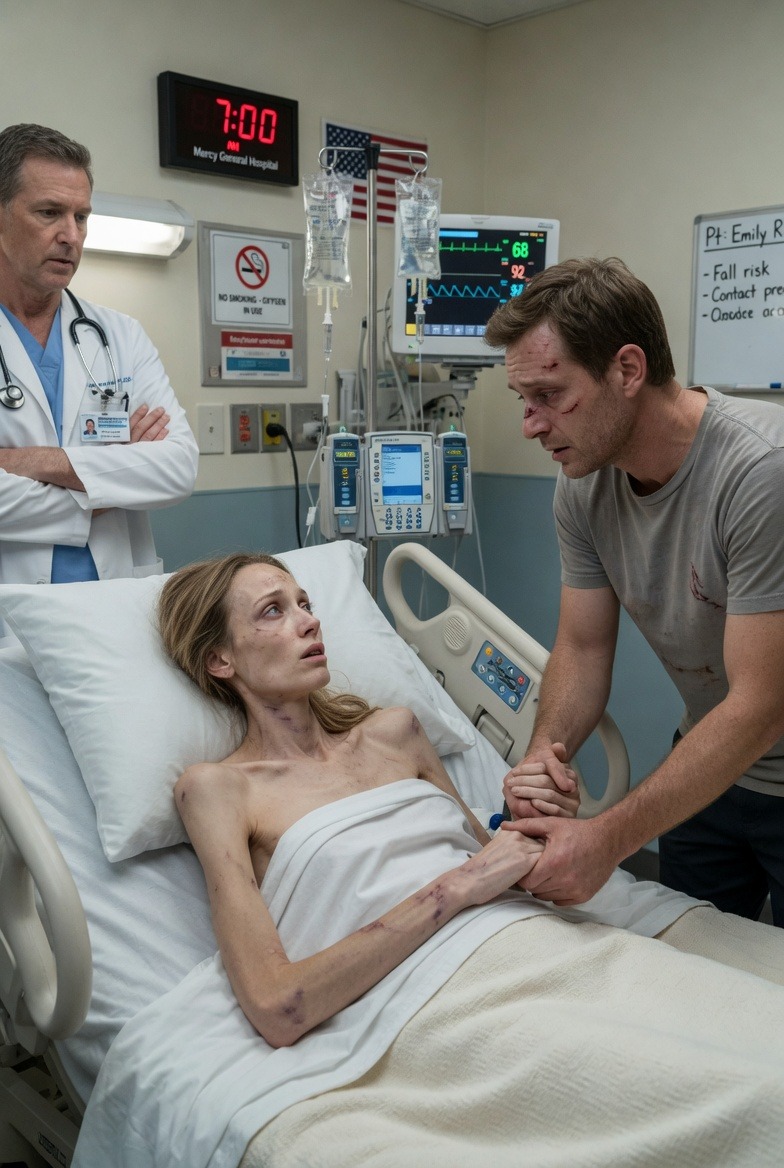
Dr. Harris looked at the mug.
“Set it down, Mr. Ward.”
Caleb turned his head slowly. “Excuse me?”
“On the counter,” Dr. Harris said. “Not beside her.”
The room changed temperature without the thermostat moving. Rebecca could hear the monitor, the soft hiss of oxygen from the wall, the rubber soles of the security officer shifting near the door.
Caleb still held the mug.
“It’s tea,” he said with a small laugh. “She drinks it every night.”
The woman in the blazer stepped forward.
“That’s why we’re interested in it.”
Caleb’s thumb pressed against the handle until his knuckle whitened.
Rebecca did not speak. Her mouth was too dry. Her pulse was already answering for her on the monitor.
Dr. Harris reached for a sealed plastic evidence bag and held it open.
“Mr. Ward,” he said, “place the mug inside.”
Caleb’s eyes moved once to Rebecca.
Not fear yet.
Calculation.
Then he smiled again.
“Doctor, my wife is very ill. I understand everyone is emotional, but this is unnecessary.”
Rebecca watched the woman in the blazer tilt her head.
“What’s unnecessary,” she said, “is a husband leaving his terminally ill wife’s room, driving home to open her private safe, and returning with an unapproved drink after being told no outside liquids.”
The tablet under Rebecca’s blanket felt suddenly heavy.
Caleb went still.
For the first time since the diagnosis, his face stopped performing grief.