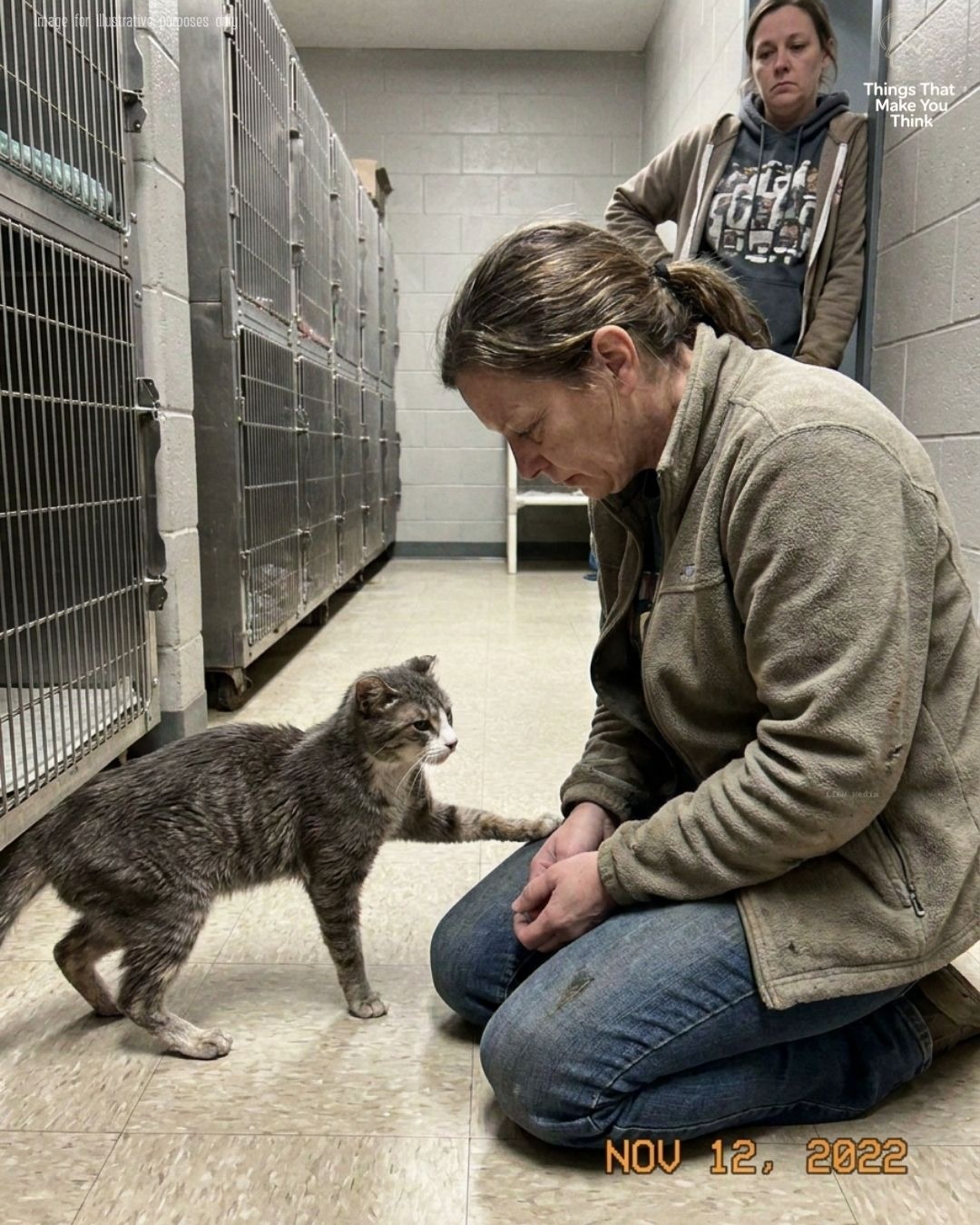
Amos hated the cold.
He became a professional heat seeker.
If there was a warm laundry pile, he found it.
If there was a heating vent, he occupied it.
If I sat down with a blanket, he appeared like he had been summoned by ancient law.
His steps got slower.
His naps got longer.
Some days, he ate like a little king.
Other days, he sniffed the bowl and walked away offended.
I learned his moods.
Chicken was acceptable on Monday.
Disgusting on Tuesday.
Salmon was wonderful unless I bought too much of it.
Turkey was tolerated if served warm.
Medicine was unacceptable unless hidden with ridiculous care.
The old man had standards.
I respected that.
Every morning, I gave him his breakfast and said, “Another day, Amos.”
Every night, when he settled against me, I said, “We made it.”
It became our prayer.
Not fancy.
Not religious in a way anyone could argue about.
Just gratitude.
Another day.
We made it.
Then came the morning he did not come to the kitchen.
I knew before I found him.
You know.
When a house has an old animal, you develop a second heartbeat.
You listen for the soft sounds.
The scratch of claws.
The water bowl.
The little grunt when they jump down from somewhere they should not have jumped up to in the first place.
That morning, the house was too quiet.
I found Amos on the blue blanket at the foot of my bed.
Awake.
Breathing.
But tired in a new way.
Not sleepy.
Far away.
I sat beside him.
“Hey, old man.”
He turned his head slowly.
His eyes found mine.
Then his paw moved.
Barely.
Toward my hand.
I took it.
I called the vet.
She told me to bring him in.
Her voice was gentle in the way that tells you she already knows.
I wrapped Amos in the blue blanket.
The same one from his first night home.
In the car, he did not cry.
He rested his head against my wrist.
I drove carefully.
Absurdly carefully.
As if every stoplight mattered.
As if tenderness could keep time from moving.
At the clinic, the receptionist took one look at us and stood up.
No one made me wait in the front room.
No one asked loud questions.
They put us in a small quiet room with soft lighting and a chair big enough for both of us.
The vet came in.
She examined him.
Listened.
Touched.
Waited.
Then she looked at me with wet eyes.
“He’s very tired.”
I nodded.
My throat had closed.
“He’s not in panic,” she said. “He’s not alone. But his body is failing.”