Lucky.
That word again.
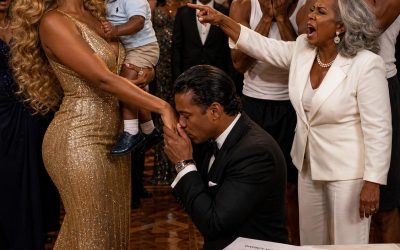
My mother floated up to the front in a silver dress and careful makeup, proud as a queen. Uncle Ray stood off to one side, hands folded, watching everything with those steady eyes of his. He glanced back at me once. There was apology in his face, but not surprise.
That hurt, too.
Nothing makes pain feel more permanent than realizing other people saw it coming.
I stood beside Ellie with my hands clasped so tightly my knuckles ached. I tried not to cry. Not because crying would have been weak, but because I was tired of giving that family proof that I had one more feeling they’d need to manage.
Ellie climbed onto her chair to get a better view.
Then she leaned down close to my ear and whispered, “Mom, that lady is mean.”
I closed my eyes for half a second. “Ellie.”
“She is.”
“Honey, hush.”
“She said you’re bad luck.”
My eyes flew open.
I turned to her so fast the chair legs scraped. “What?”
Ellie blinked, startled by the edge in my voice. “I heard her,” she said, softer now. “When I was by the cake. She was talking to Grandma. She said she didn’t want you near the pictures because every big thing in your life turns sad.”
There are moments when your body becomes all sensation.
I heard the air conditioner before I heard the room. I felt my pulse in my teeth. The back of my neck went cold. Ellie kept talking, innocent and precise the way children are when they do not yet understand how adults bury things under performance.
“She also said Uncle Luke is a good match and that love can come later if the life is nice enough.”
I stared at her.
The world around us had narrowed into one tiny terrible tunnel: my daughter, in her blue dress, telling me calmly that she had overheard the bride-to-be reduce my brother to a convenient life and me to a contagious omen.
I should have said, Stay here.
I should have said, We’re leaving.
I should have picked her up and walked straight out of that ballroom into the parking lot and never looked back.
Instead, I made the mistake people like me always make. I tried to contain the moment.
“Ellie,” I whispered, “you do not repeat that here. Do you understand me?”
Her little face changed.
It wasn’t defiance exactly. It was hurt. Confused hurt. The kind that says I told the truth and somehow became the problem. She looked toward the stage again, then back at me, and I saw something settle in her expression.
Not rebellion.
Conviction.
Children do not learn courage from lectures. They learn it from the moment they realize the adults they love are being treated unfairly and nobody else is standing up. Something in Ellie went still.
Then she slid off the chair.
“Ellie,” I said, reaching for her hand.
I missed.
She had already stepped between two tables and started walking toward the front of the room with a purpose that did not belong in such a small body. I went after her immediately, whispering apologies as I squeezed between guests.
She wasn’t running.
That was what made it feel unreal. She wasn’t a child darting into trouble. She was moving like somebody had given her a job and she intended to finish it.
By the time I got around the third table, people were turning to watch.
A little girl in a blue dress on a mission has a way of pulling a whole room’s attention without trying. Conversations thinned. A few guests smiled, assuming she’d been asked to hand over flowers or stand for a photo.
I knew better.
My heart pounded so hard it hurt.
“Ellie,” I hissed, as quietly as panic will allow. “Stop.”
She did not stop.
She reached the front of the stage and planted herself at the bottom step. Luke looked down, confused. Vanessa’s smile flickered. My mother’s mouth tightened into a line so sharp it could have cut paper.
I was maybe ten feet away when Ellie climbed the step.
I started forward.
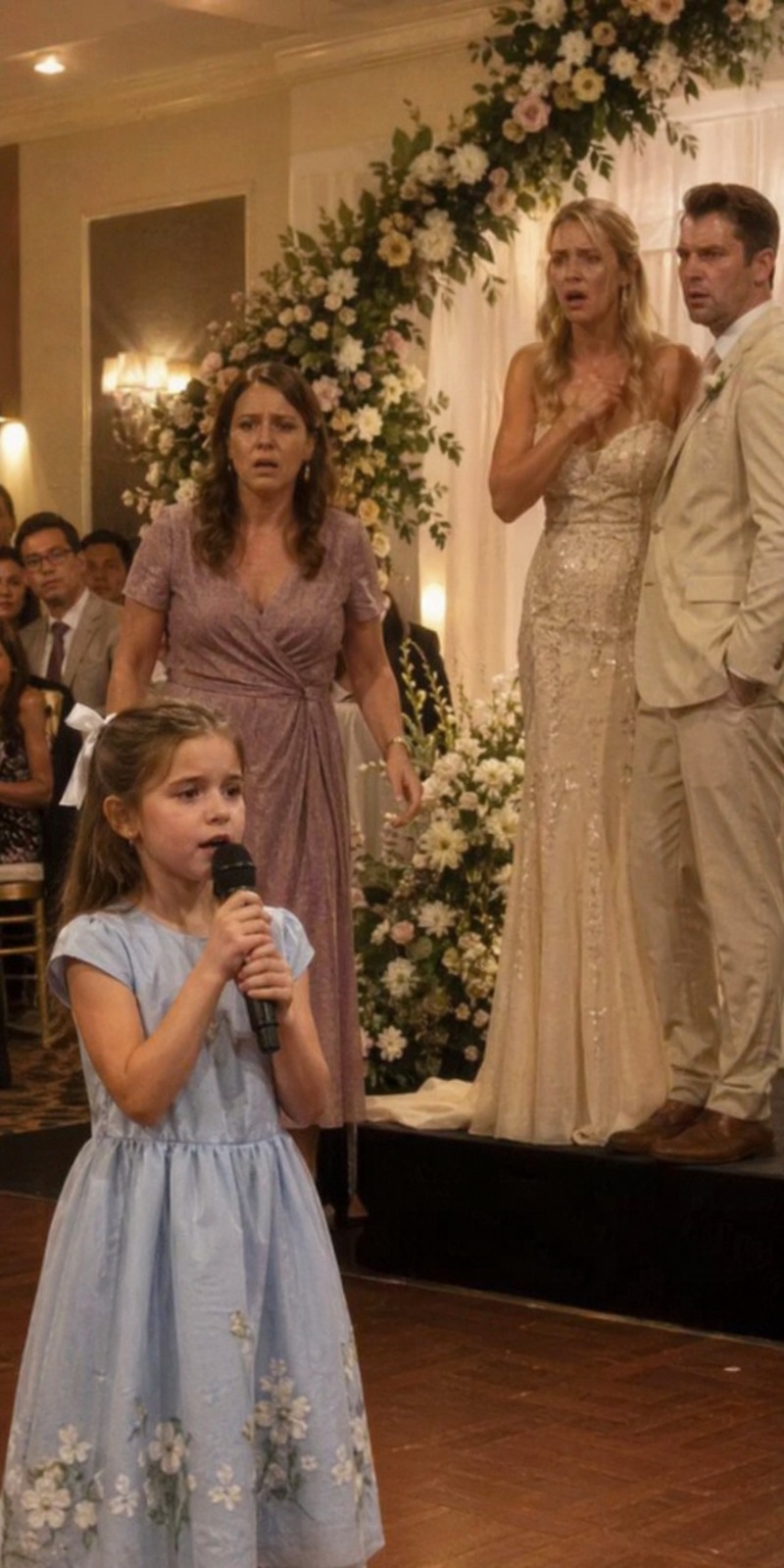
At the same moment, the emcee lowered his microphone to say something to Luke, and Ellie did the most impossible thing I have ever seen in my life: she reached for the spare wireless mic resting on the stand beside him, wrapped both hands around it, and lifted it toward her face.
Everything stopped.
The photographer froze mid-step. A cousin near the front lowered her phone. Even the sound system seemed to hum louder in the sudden quiet. Vanessa took one quick step toward Ellie, then hesitated because half the room was already watching.
My daughter looked out at nearly a hundred people like she had every right to be there.
And for the first time that night, somebody in my family did.
“Can I say something?” she asked.
Her voice came through the speakers clear and bright and impossibly calm.
A little nervous laughter rippled through the room. The kind adults use when they think a scene might still be turned into a cute story later. Vanessa reached for the mic with a strained smile.
“Oh, sweetheart, maybe not right now—”
Ellie shifted just enough to keep the microphone.
“My name is Ellie,” she said. “I’m seven. And I want to say something about my mom.”
I stopped breathing.
There are silences that feel empty. This one did not. This one felt packed full of every secret my family had ever kept.
Ellie stood there with her ribbon slipping loose and her tiny hands wrapped around a microphone that looked too big for her. But her voice did not shake.
“You said my mom is bad luck,” she said, looking straight at Vanessa.
A gasp moved through the room like wind through leaves.
Vanessa’s face changed all at once. Not embarrassed. Not yet. More like a woman who had just realized the private thing she tossed carelessly into the air had landed in the wrong ears and grown teeth.
Luke turned slowly toward her.
Ellie kept going.
“That’s not true. My mom is the best person I know. She makes pancakes shaped like moons when I’m sad. She reads the funny voices in books even when she’s tired. She works all day and still helps me study my spelling words and she always lets other people have the last cookie, which I think is too nice.”
A few people made involuntary sounds. Not laughter. Something softer. Something aching.