The officer handed me a paper. “I’m not here to fight you. I’m here to document. Show up Thursday. Bring whatever paperwork you have.”
He glanced at Tank one more time.
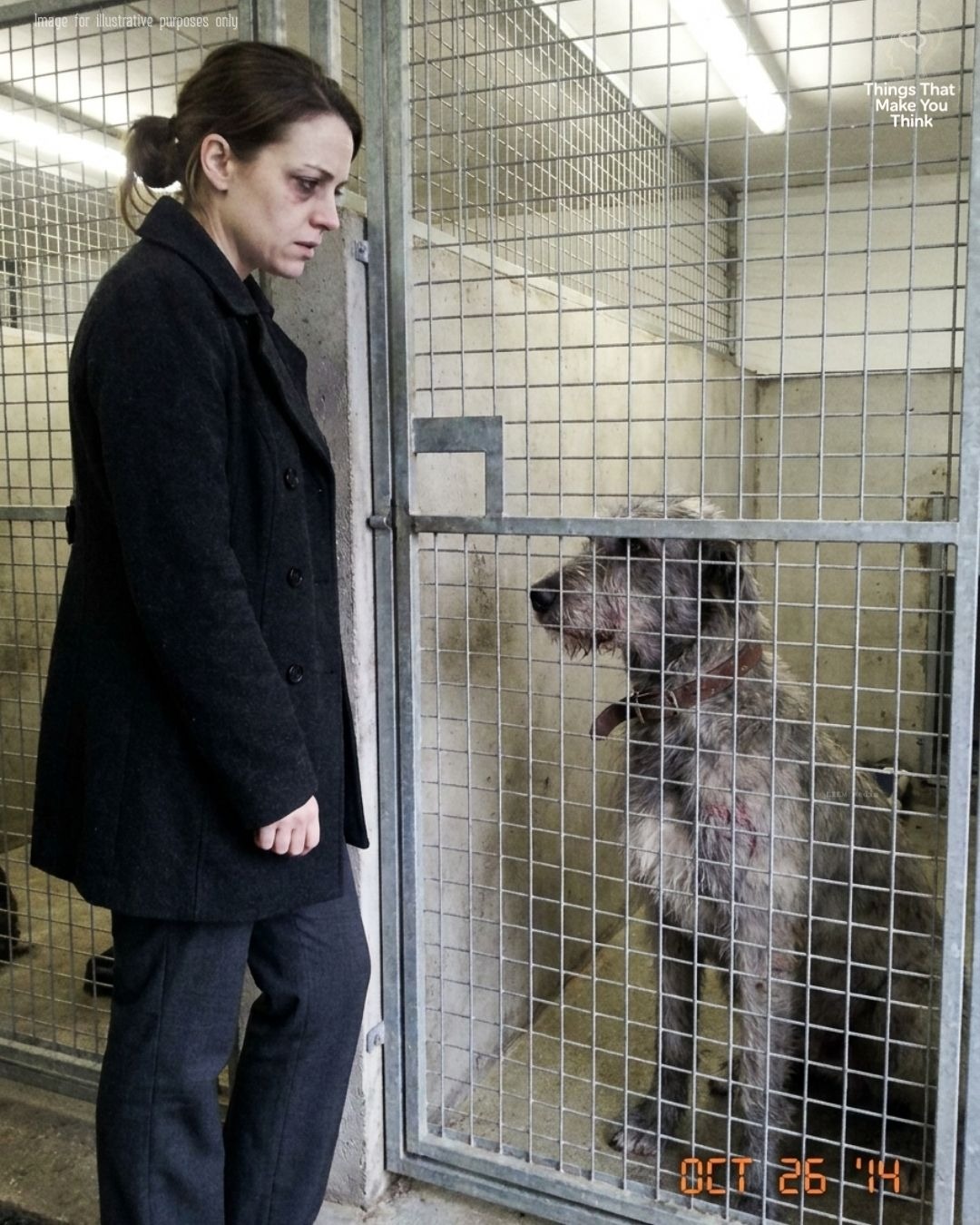
Tank blinked slowly, like a dog who had already learned the world didn’t always deserve his energy.
When the officer left, the neighbor stayed on the porch a moment longer, camera still up.
“You think you’re special,” she said, low, like she wanted only me to hear. “You think money makes you above consequences. But out here? We protect our own.”
I stared at her, and the strangest thought slid through me:
So did my father.
I shut the door without another word, and the moment the latch clicked, Tank stood and pressed his scarred head against my hip.
Not demanding.
Not panicking.
Just… there.
A warm, steady weight.
Like a promise.
That night, I didn’t sleep.
I sat at my father’s kitchen table with a yellowed notebook open, the one I’d found behind the coffee can. My father’s handwriting slanted hard to the right, like he’d been writing while moving, while working, while living.
There were names. Dates. Notes.
“Hank — highway ditch — hates men in hats.”
“June — gas station dumpster — eats slow.”
“Otis — back lot — doesn’t like doors closing.”
And then, near the back, something that made my breath catch:
“Tank — bait dog — won’t fight — good boy — don’t let them kill him.”
Under that, a line I didn’t understand until I read it twice:
“If they come after you, go to the church hall. Talk to Pastor Reed. He knows.”
My father wasn’t a church man. I couldn’t picture him in a pew, singing softly, hands folded. But I could picture him fixing a pastor’s old truck for half price and telling him to keep the change.
I ran my thumb over the ink until it blurred.
Outside, the wind rattled the bare branches. The house creaked like it was remembering how to be lived in.
Tank slept on the rug near my chair, one paw stretched toward my foot.
And I thought about that hearing.
About the neighbor’s livestream.
About how fast a story could grow legs and run away from the truth.
I’d worked in corporate long enough to know the power of narrative. I’d watched people build reputations and destroy them with one carefully placed rumor, one well-timed whisper, one photo posted without context.
I’d left that world.
But it hadn’t left me.
And out here, the story was simple:
Scarred dog equals danger.
Ex-con father equals shame.
Woman who chooses them equals reckless.
I could already see the comments:
“She’s going to get someone killed.”
“These dogs should be put down.”
“People like her always learn the hard way.”
And some part of me, the old part—the polished part—wanted to fix it the way I used to fix everything.
With optics.
With distance.
With a clean break.
I could load Tank back into my car tomorrow, drive him to a no-kill rescue hours away, and let the problem become someone else’s.
I could call a contractor, build a tall fence, keep everything hidden.
I could go quiet.