I chose my words like I was walking across a frozen pond.
“That decision belongs to the adults responsible for keeping you safe,” I said. “But your feelings should matter. All of them. Even the messy ones.”
Emily looked disappointed.
Kids hate careful answers.
So did I, at her age.
But I would not promise power I did not have.
That was another thing Arthur taught me.
Never hand a child a fake key.
They’ve already spent too much life trying doors that don’t open.
Over the next three weeks, Emily came to the farm four times.
Then six.
Then every Tuesday and Thursday.
She never talked much in the car, according to June.
But she talked to Titan.
She told him about the foster home.
Not bad things.
Just little things.
The guest room smelled like lavender.
The foster mother, Denise, cut sandwiches into triangles.
The foster father, Mark, whistled while washing dishes.
They had a dog that wanted to be friends too badly.
They were nice.
That seemed to bother Emily most of all.
Nice people are confusing when you don’t feel nice inside.
One afternoon, she sat on an overturned bucket outside Titan’s stall and picked at the sleeve of her hoodie.
“Denise says I can call her Mom someday if I want.”
I kept cleaning a bridle.
“What do you think?”
“I think she wants me to.”
“That’s not what I asked.”
Emily kicked at a clump of hay.
“I think if I call her Mom, my real mom disappears.”
I nodded.
“And if I don’t, Denise looks sad.”
There it was again.
A twelve-year-old managing adult emotions like unpaid labor.
I set the bridle down.
“Emily, can I tell you something Arthur told me once?”
She didn’t say yes.
But she didn’t say no.
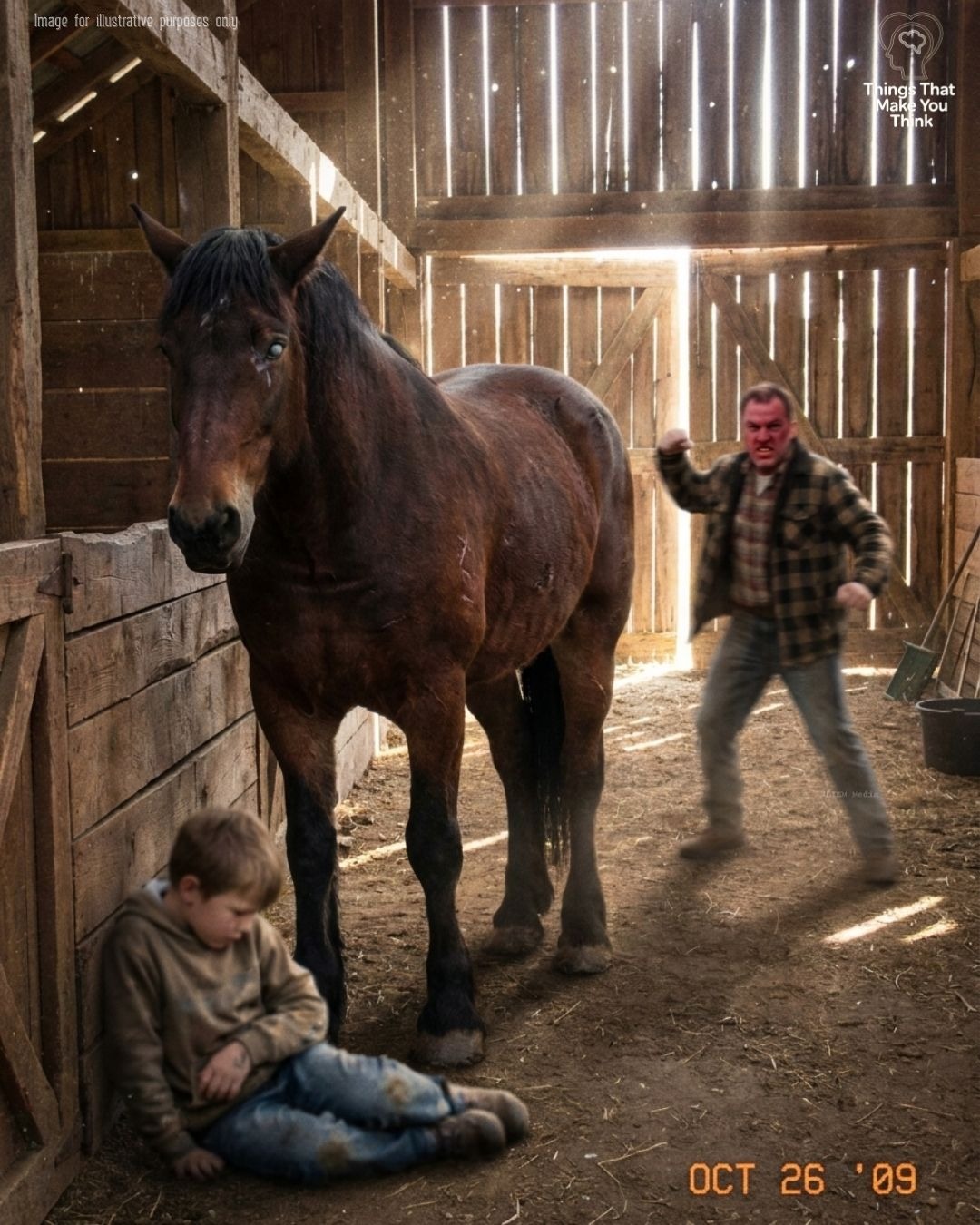
“When my mom and I lived above this barn, she cried every night for a while. I used to try to be extra good during the day so she wouldn’t cry.”
Emily stopped picking her sleeve.
“I cleaned things that weren’t dirty,” I said. “I smiled when I was scared. I said I was fine when I wasn’t. I thought if I became easy enough, she would stop hurting.”
Emily looked at me.
“Did it work?”
“No.”
She looked down again.
“What did?”
“Time. Safety. And people telling me I wasn’t responsible for carrying grown-up sadness.”
The barn went very quiet.
A horse shifted in the next stall.
A swallow flew in the rafters.
Emily whispered, “Denise is nice.”
“I believe you.”
“So why does it make me mad?”
“Because nice doesn’t mean you owe someone your heart on their schedule.”
She absorbed that like a dry field taking rain.
That night, Denise called me.
I had just finished checking the fences.
Her voice shook with controlled politeness.
“Mr. Mercer, I appreciate what you’re doing for Emily.”
That sentence almost always means the opposite is coming.
“But I need to ask what exactly you’re telling her.”
I leaned against the porch rail.
The evening was cold.
“What do you mean?”
“She came home today and said she doesn’t owe me her heart.”
I closed my eyes.
Of course she did.
“She repeated something from our conversation.”
“She threw it at me,” Denise said. “I made dinner, and she said it like I was trying to steal something from her.”
“Were you?”
Silence.
I regretted the sharpness immediately.
Denise inhaled.
“I have loved that child since the day they brought her here.”
“I’m sure you have.”
“No, I don’t think you understand. We took the classes. We made the room. We changed our whole lives. We sit through the nightmares. We get pushed away every time we get close. And now she goes to your barn for two hours and comes home looking at us like we’re the problem.”
Her voice cracked.
And there it was.
The part nobody wants to say out loud.
Good foster parents can still want something from a child.
Gratitude.
Attachment.
A happy ending.
A return on love.
That doesn’t make them bad.
It makes them human.
But wounded kids feel expectations like ropes.
“I don’t think you’re the problem,” I said.
“Then why does it feel like you’re giving her permission not to bond with us?”
“Because maybe she needs permission.”
Denise made a small sound.
Like I had slapped her without touching her.
I softened my voice.
“Denise, I’m not your enemy.”
“Then help us,” she said. “Help us become her family.”
I looked toward the barn.
Titan was a dark shape in the stall window.
“I can help Emily feel safe,” I said. “But I can’t make her choose who gets to be family.”
Denise was quiet for a long time.
Then she asked the question that would divide everyone later.
“What if her mother gets another chance and breaks her all over again?”
I didn’t have an answer.
Not a clean one.
So I told the truth.
“Then every adult around her has to make sure Emily is not the one paying the price.”
Denise hung up politely.
Which somehow felt worse than anger.
The following Tuesday, Emily didn’t come.
June called at noon.
“There’s been a change.”
I was in the feed room, scooping grain.
“What kind of change?”
“Emily’s mother requested a supervised visit.”
My hand froze in the feed bin.
“And?”
“And Emily said she wants Titan there.”
I looked at the phone like it had turned into a snake.
“She wants what?”
“She says she’ll only go if Titan comes.”
“June, he’s a two-thousand-pound elderly rescue horse. I can’t just haul him into some visitation room.”
“I know.”
“She knows?”
“She said if adults can make her sit in rooms that scare her, adults can figure out one room that doesn’t.”
I almost smiled.
Then I didn’t.
Because she was right.
And because being right does not make the world easy.
June continued.
“There’s an outdoor pavilion behind the family center. Fenced. Quiet. We could arrange it if your insurance allows.”
Of course.
Insurance.
The modern gatekeeper of mercy.
“I’ll check,” I said.
But I already knew I was going to find a way.
The visit was set for Friday afternoon.
All morning, the farm felt wrong.
Even the horses seemed restless.
Titan loaded slowly into the trailer, stiff in the hips but calm.
I brushed him until his coat shone.
Then I stood with my forehead against his massive neck.
“Arthur,” I whispered, “I hope I’m not messing this up.”
The wind moved through the oak trees.
No answer came.
Only Titan’s steady breathing.
The family center sat on the edge of town in a low beige building with too many windows and not enough warmth.
The outdoor pavilion was behind it, surrounded by a tall wooden privacy fence.
There was a picnic table.
A few chairs.
A sad little flower bed.