“Everything okay?”
She hesitated.
“People are being nice. But it feels… strange.”
“Strange how?”
She glanced toward the registers.
“Like some people are happy I’m back. And some people think I got something they didn’t.”
I didn’t lie.
“Some do.”
Her face fell.
“I knew it.”
“Chloe—”
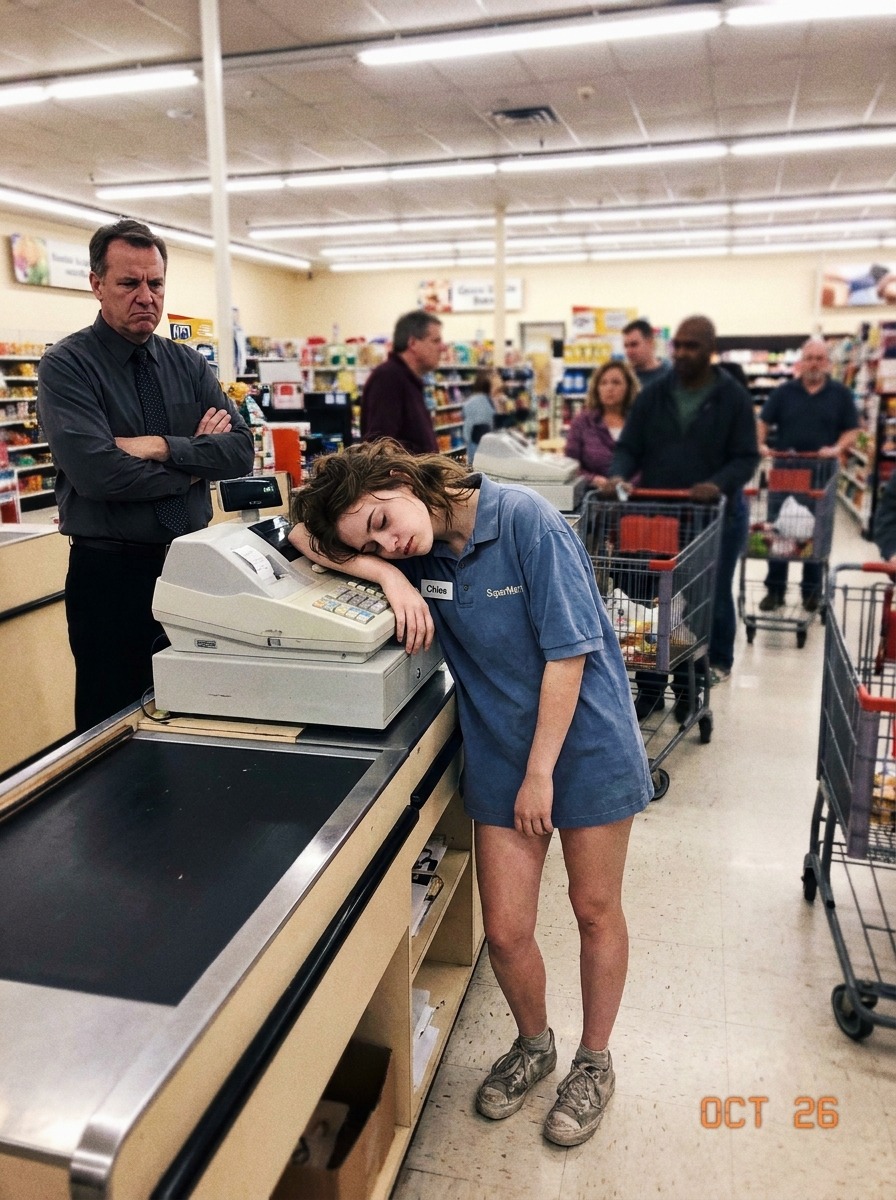
“I didn’t ask for this,” she said quickly. “I didn’t ask for money. I didn’t ask for leave. I definitely didn’t ask to be a supervisor.”
“I know.”
Her eyes shone.
“Maybe you should change the badge back.”
“No.”
“But if it’s causing problems—”
“The problem isn’t your badge.”
She looked confused.
“The problem is that I helped one person after ignoring a lot of people.”
She hugged the clipboard against her chest.
“That’s not my fault.”
“No,” I said. “It’s mine.”
For the rest of the week, the store felt like a house with a cracked foundation.
Everything looked normal from the outside.
Inside, you could hear the walls shifting.
Customers came and went.
Registers beeped.
Carts rattled.
The bakery smelled like bread.
But beneath it all, there was a question nobody could stop asking.
What does a workplace owe a person who is breaking quietly?
By Wednesday, the anonymous post had spread through half the town.
People came in just to look around.
Some asked for Chloe by name.
Some wanted to donate money.
Some wanted to lecture me.
One older man at register two told me I had restored his faith in people.
Ten minutes later, a woman in workout clothes told me I was the reason nobody wanted to work anymore.
“You can’t just pay people for sleeping,” she said loudly.
Chloe heard every word.
Her face went pale.
I stepped over.
“Ma’am,” I said evenly, “we appreciate your business, but we don’t discuss employee matters at the register.”
“I’m just saying what everyone’s thinking.”
“No,” Tanya said from register one.
We all turned.
Tanya didn’t raise her voice.
She didn’t need to.
“You’re saying what some people think when they’ve never been desperate.”
The woman stared at her.
The line went silent.
Then the woman grabbed her receipt and left.
Tanya kept scanning groceries.
Chloe looked at her.
Tanya didn’t look back.
But she said, “Bag the eggs on top, Chloe.”
It was the closest thing to forgiveness I had seen all week.
On Friday morning, Elaine came back.
This time, she brought someone with her.
A man named Warren Keene from regional human resources.
He had silver glasses, a soft voice, and a folder thicker than Elaine’s.
That meant trouble dressed politely.
We met in the training room.
Elaine sat across from me.
Warren sat at the head of the table.
Chloe sat beside me because I had asked her to be there.
She didn’t want to come.
I told her she deserved to hear decisions made about her life.
Warren folded his hands.
“Arthur, we’ve reviewed your statement.”
I nodded.
“And while your intentions were compassionate, there are compliance concerns.”
Elaine gave me a small look.
Not a smile.
Worse.
A warning.
Warren continued.
“Paid leave without authorization. Relief funds without formal application. Promotion following a disciplinary reversal. These create risk.”
“There was no disciplinary reversal,” I said. “The termination was wrong.”
“Based on what?”
“Based on context I failed to collect.”
Warren looked at Chloe.
“Ms. Bennett, did Mr. Davis know about your circumstances before terminating you?”
“No,” Chloe said.
“Did you tell him?”
“No.”
“Did you fall asleep while assigned to a register?”
She swallowed.
“Yes.”
Warren wrote something down.
I felt my heart begin to pound.
Elaine leaned forward.
“That is the central issue. Regardless of personal circumstances, sleeping at a register creates operational and customer service risk.”
Chloe stared at the table.
I wanted to object.
But part of me knew Elaine was not entirely wrong.
That was the moral trap.