You don’t remember all the exact moments he names.
That may be the ugliest part.
To them, each one was a marker. A day circled by absence. To you, they dissolved into ambition so completely that memory only kept the outline of your own struggle, not the collateral damage. The city taught you speed, polish, and how to answer every vulnerability with competence. Somewhere along the way, you stopped noticing that the people who loved you were becoming a past-tense responsibility instead of a present-tense fact.
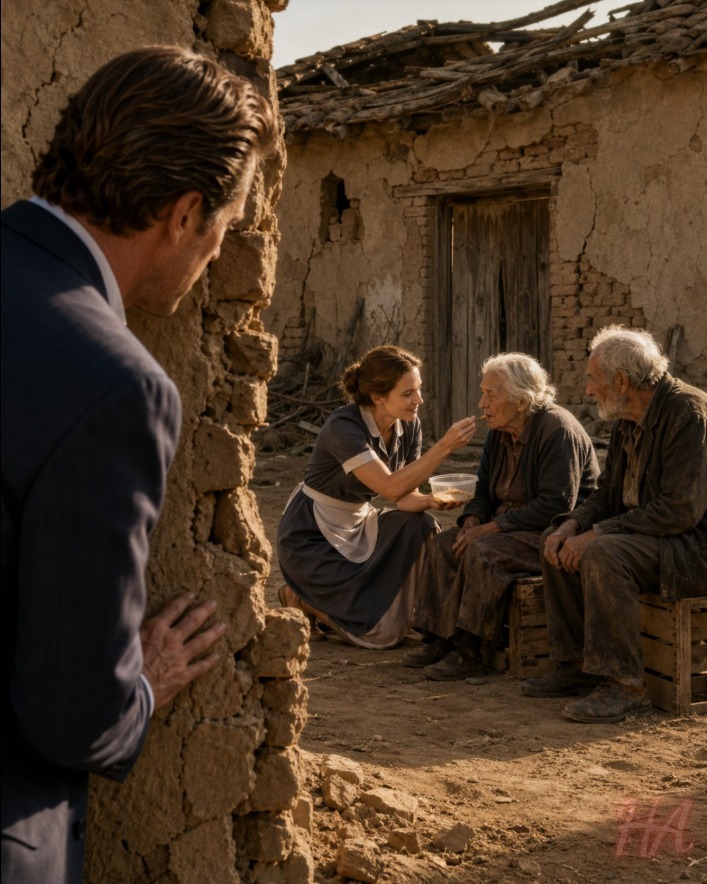
“Rosita stayed,” your father says. “She took your mother to clinics. She worked cleaning houses in town. She sold tamales at the bus stop before dawn. Kept us going when the roof leaked and the medicine ran short.” His voice roughens for the first time. “She never had time to build a better life because she was always carrying the one you left behind.”
You close your eyes.
If guilt were only pain, maybe it would be easier. But guilt has images. Rosita at a bus stop in the dark. Rosita counting coins. Rosita lifting your mother into a truck for appointments. Rosita dying before you even knew she was in danger. Your mother calling you by her name because the mind, maybe, chooses the child who kept showing up.
When you open your eyes again, your father is watching you with no visible mercy.
“You came back now,” he says. “Why?”
The question should be simple.
Because Consuelo was taking food. Because your wife complained. Because curiosity led you to a dirt road. Because something in those old hands hit a nerve. But none of those answers are enough, and both of you know it. So you tell the truth that matters most.
“Because I thought I had everything under control,” you say. “And when control broke, I found out what I had really been ignoring.”
Your father nods once, which is not forgiveness, only recognition of an accurate sentence.
You try to offer money first because money is what your adult hands know how to produce when life cracks open. Cash. Doctors. Caregivers. Repairs. A better roof, proper beds, a nurse for your mother, cataract surgery consults, food deliveries, anything. Your father listens to all of it without interrupting. Then he says, “Do it if it’s for them. Not for your conscience. That thing is already late.”
He is right, and you hate him for it for one selfish second before loving him more for the same reason.
You drive them to a clinic that evening with Consuelo in the front seat and your parents in the back because your mother insists on holding the tin rosary she thinks belonged to Rosita. The doctors speak in words you understand too well once they are directed at people you failed: untreated hypertension, memory decline consistent with dementia, chronic malnutrition, dental collapse, cataracts, preventable infections, advanced arthritis. None of it is glamorous enough for tragedy. It is the slow violence of not being consistently cared for.
Back in the city that night, your wife is waiting in the living room when you come home