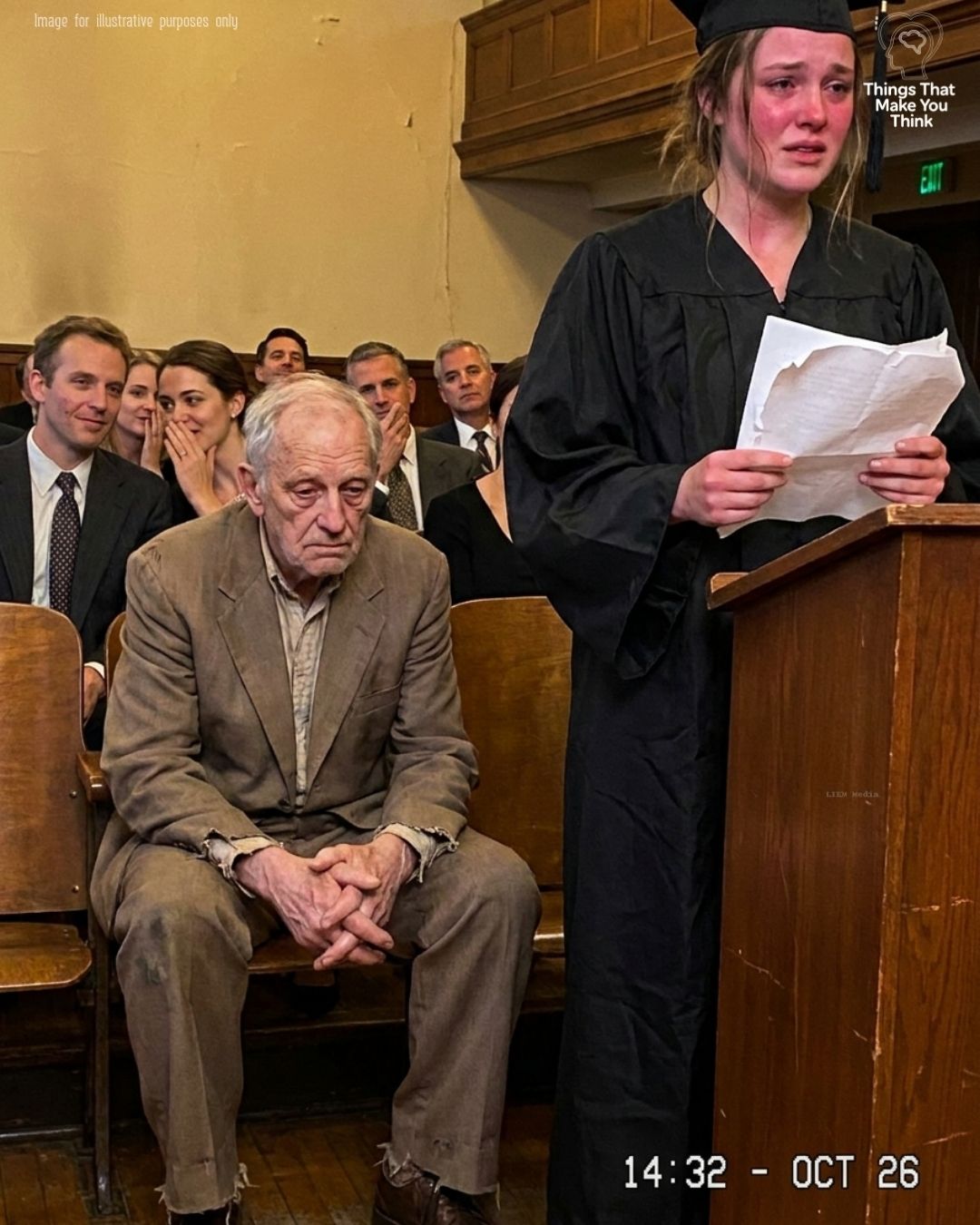
“Then let me make this simple,” I said. “That photo does not come down.”
Grant’s mouth tightened.
“I admire your loyalty. But loyalty can become ego when it stands in the way of the greater good.”
That line stayed with me.
Because it was not entirely absurd.
And that was what made it dangerous.
The greater good.
Who can argue against that?
If one photograph offended a donor who could fund care for thousands, was I being principled?
Or selfish?
Was I defending dignity?
Or clinging to a symbol because it made me feel clean?
Grant picked up the folder and slid it closer.
“Think about it,” he said. “You know better than most that sacrifice is sometimes necessary.”
Then he left.
The administrators followed him out.
And I stood alone in my office, staring at my father’s hands.
For the first time in years, that photograph felt heavy.
Not because I doubted my father.
Because I doubted myself.
That evening, I drove to my father’s house.
He lived in a small brick home with a tiny front porch, a loud old refrigerator, and a backyard where he grew tomatoes like they were a personal challenge from God.
When I pulled up, he was sitting outside with my two children.
My daughter was drawing chalk flowers on the driveway.
My son was holding a plastic dinosaur and explaining something very serious about volcanoes.
My father listened like the fate of the world depended on that dinosaur.
He had aged since graduation day.
His hair had gone from gray to white.
His walk had slowed.
Some mornings, his back stiffened so badly he had to hold the kitchen counter before standing straight.
But his eyes still lit up when he saw me.
“Mija,” he said.
One word.
And I was seventeen again.
Tired.
Afraid.
Trying to be more than my circumstances.
I kissed his cheek and sat beside him on the porch.
He looked at my face.
“What happened?”
That was my father’s gift.
He had spent his life cleaning rooms after people left them.
He could read what remained.
I told him everything.
About Grant.
The new wing.
The fellowship.
The photograph.
The word branding.
My father listened without interrupting.
His hands rested in his lap, the same hands everyone had applauded years earlier.
When I finished, I expected anger.
I wanted it, maybe.
I wanted him to sit up straight and say, “How dare they?”
I wanted him to give me permission to fight.
Instead, he looked out at the tomatoes.
Then he said quietly, “Take it down.”
I turned to him.
“What?”
He kept his eyes on the yard.
“If it helps sick people, take it down.”
“Dad.”
He shrugged.
“It’s a picture.”
“It’s not just a picture.”
“To you, maybe not. To me, it is my hands. I still have them.”
He smiled gently and lifted them.
“See?”
I wanted to argue.
But his face stopped me.
There was no bitterness in it.
No defeat.
Only the strange, brutal generosity of a man who had given so much for so long that even his dignity was something he was willing to donate.
“That fellowship could help students,” he said. “Students like you.”
“No,” I said. “Not like me. Students like me are exactly who they want to polish until nobody can tell where we came from.”
He looked at me then.
Softly.
“Mija, I scrubbed floors so you could stand in rooms I was never invited into. If the price of helping someone else enter those rooms is taking down one photo, maybe that is not the worst thing.”
I felt tears rise.
“Do you hear yourself? They’re asking me to hide you again.”
My father’s face changed.
Only a little.
But I saw it.
The old wound.
The hallway wound.
The daughter passing by with her classmates.
The father lowering his eyes so she could survive.
He looked down at his hands.