Ana smiled.
Just a little.
Martina grinned.
“I told you.”
Lucía looked at Martina.
“You gave it as a gift?”
Martina nodded.
“Gifts don’t go backward.”
Lucía’s face changed.
Softened.
Brightened.
And I knew she understood.
The hoodie had become something larger than cloth.
It had become a rule.
A quiet rebellion.
A small gray argument against shame.
Adults build systems.
Children build traditions.
On the drive home, Lucía was quiet.
I let her be.
Then she said from the back seat, “I’m glad Ana has the hoodie.”
“Me too.”
“I did miss it though.”
“I know.”
“But maybe that’s okay.”
I looked at her in the mirror.
“What do you mean?”
She shrugged.
“Maybe some gifts are supposed to make you miss them a little. So you remember why you gave them.”
I had to pull into our parking space before I could answer.
Because sometimes your child says something so simple and so devastating that you need both hands on the wheel.
That night, after Lucía went to bed, I sat alone in the living room.
The apartment was quiet.
The hallway light slipped under her door.
I thought about the first day.
The sharpness in my voice.
“We never say things like that.”
I had been so sure.
So righteous.
So ready to teach.
And yes, I still believe words matter.
I still believe we should teach children not to mock smells, clothes, bodies, or homes.
I still believe respect begins with the mouth.
But I know something now that I did not know then.
Sometimes children use imperfect words to point toward real pain.
And if we silence them too quickly, we may teach politeness at the expense of compassion.
That is a dangerous trade.
Because manners without listening can become just another way to look away.
I thought about the principal’s office.
The accusation.
The anonymous note.
The apology.
The care fund.
The park.
The purple door Martina drew in chalk.
The yarn bracelet.
The ugly gray hoodie moving from one child to another.
I thought about dignity.
How often adults talk about it like it is something grand.
A principle.
A value.
A word for speeches.
But dignity is usually smaller than that.
It is offering help quietly.
It is not asking someone to tell their hardest story so you can decide whether they deserve your kindness.
It is letting a child keep her name instead of turning her into “the homeless girl.”
It is apologizing without making the apology another burden.
It is giving one good thank-you.
It is letting people still be themselves.
And maybe most of all, it is understanding that need is not a character flaw.
It is a human condition.
Sooner or later, every one of us will need something.
Food.
Shelter.
Forgiveness.
A second chance.
A ride.
A phone call.
A couch.
A hoodie.
And when that day comes, we will not want a spotlight.
We will not want whispers.
We will not want someone turning our hardest season into their lesson about generosity.
We will want what Martina wanted.
To be helped without being reduced.
To be seen without being exposed.
To be loved without being made small.
A year later, Lucía still sometimes says things that come out wrong.
She is still eight in some ways and nine in others.
She still leaves sneakers by the door.
She still loses hair ties.
She still eats the last cookie and acts surprised when I notice.
She is not a saint.
I wouldn’t want her to be.
Saints are hard to live with.
She is a child.
A messy, funny, stubborn child with a heart that notices things.
And now, when she notices, I try to listen first.
Not correct first.
Not lecture first.
Listen.
Because that was the real lesson.
Not that my daughter was kind.
I already knew that.
The lesson was that kindness needs adults who do not ruin it with ego.
Adults who do not turn it into a performance.
Adults who do not punish children for caring in ways we forgot how to.
The world will tell children to be careful.
And they should be.
The world will tell them to use respectful words.
And they should.
The world will tell them to tell adults when something is wrong.
And they should.
But may we never teach them that compassion must wait until it is convenient.
May we never teach them that privacy means silence in the face of suffering.
May we never teach them that the proper channel matters more than the person standing cold in front of them.
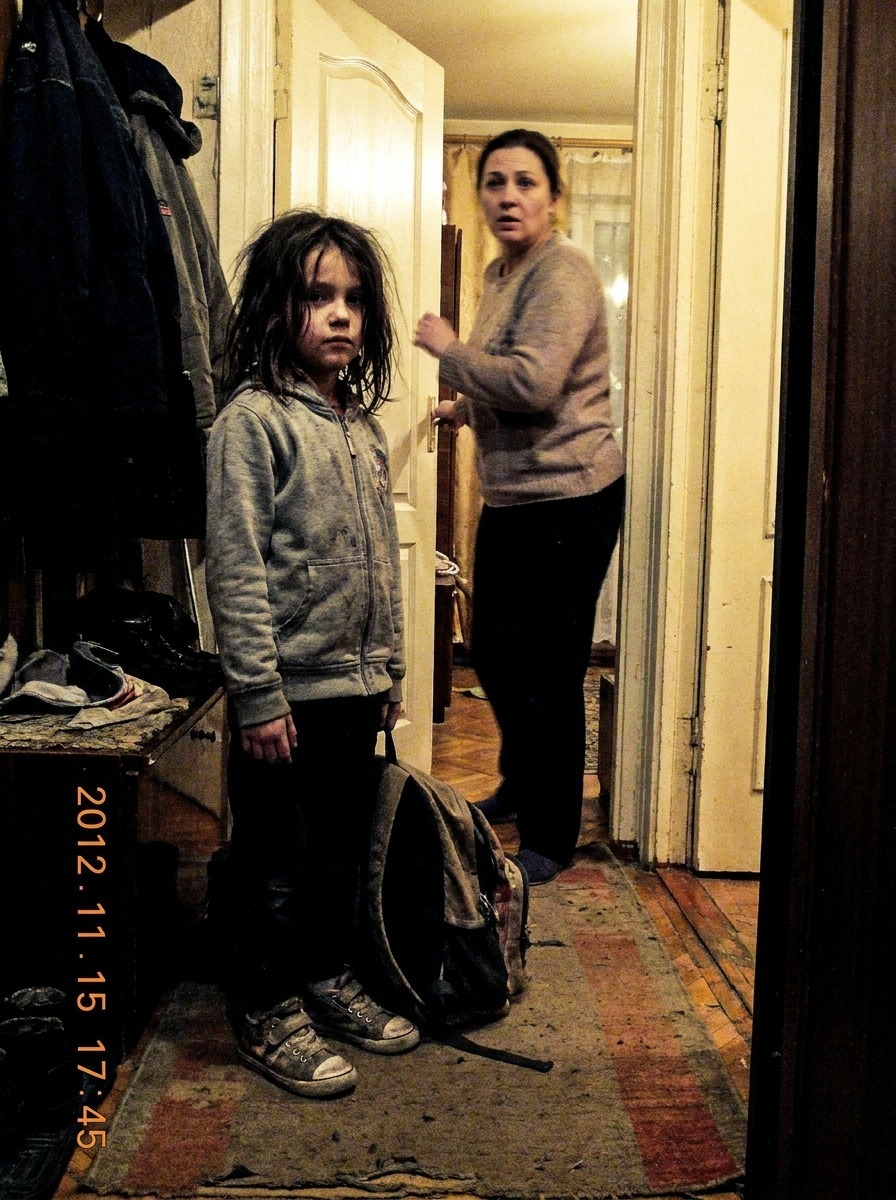
That gray hoodie is gone now.