Evan’s mother leaned forward before the principal could continue.
“My son came home very upset.”
I looked at her.
“I’m sorry to hear that.”
“He said children in the class have been talking about another student being homeless.”
The room went quiet.
I felt Ms. Bell shift in her chair.
“That’s not exactly—” she began.
But Evan’s mother kept going.
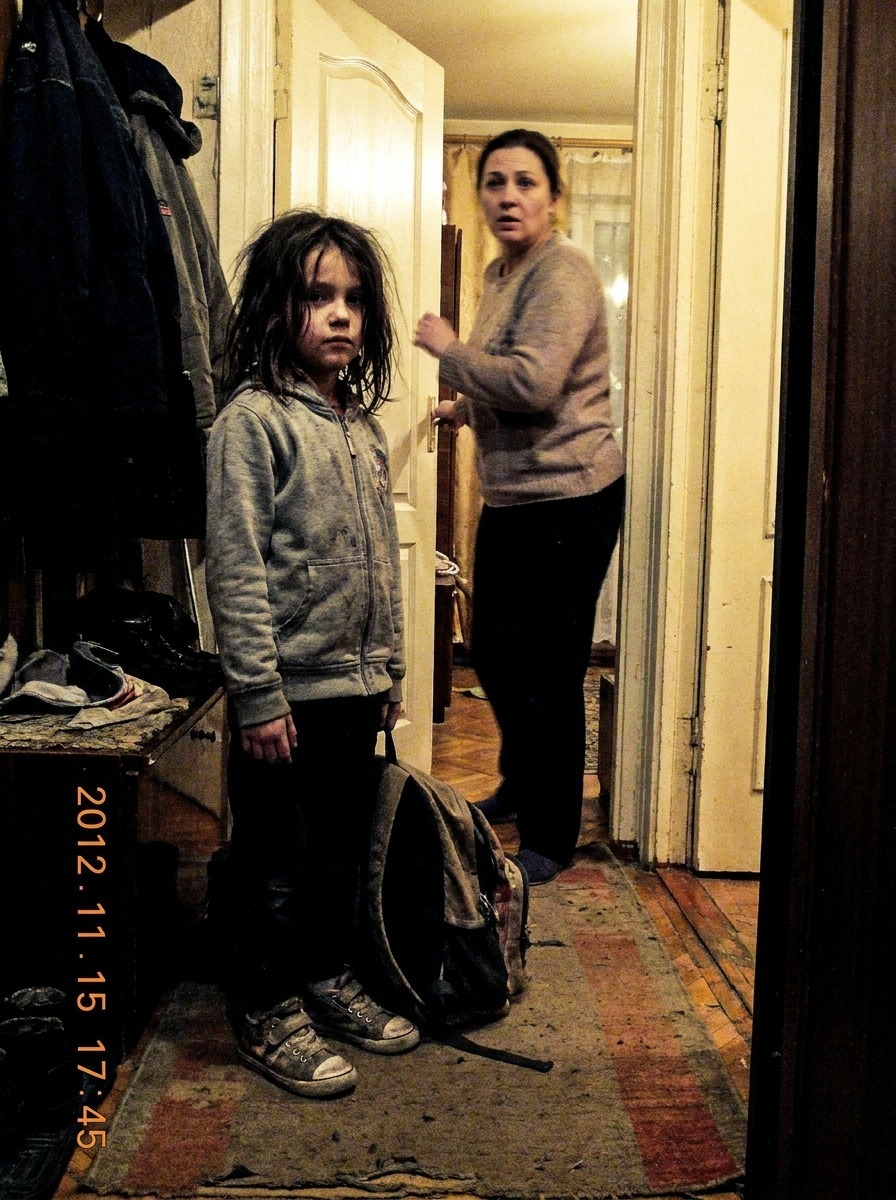
“He said Lucía was giving things to Martina. Food. Clothes. Hair accessories. And that Martina had been sleeping in a car.”
My mouth went dry.
Mrs. Harlow raised a hand slightly.
“We are not here to discuss any child’s private family circumstances.”
“Except apparently the children already are,” Evan’s mother said.
Her eyes moved to me.
“And I think it’s inappropriate.”
I stared at her.
“Inappropriate?”
“Yes. My son said Lucía told the class Martina needed help.”
My heart thudded once.
Hard.
“That doesn’t sound like Lucía.”
“Well, children don’t invent these things.”
I almost laughed again.
Not because it was funny.
Because children invent dragons, invisible sisters, and entire kingdoms under the bed.
But adults invent motives.
And somehow, we call that maturity.
Ms. Bell spoke quietly.
“I want to be clear. I did not hear Lucía announce anything to the class.”
“Then how did my son know?” Evan’s mother snapped.
Ms. Bell took a breath.
“There were rumors among a few students. I’m still trying to understand where they started.”
Evan’s mother looked at me again.
“With all due respect, this is what happens when parents involve children in adult problems.”
The sentence landed like a slap.
I sat very still.
“Excuse me?”
She lifted her chin.
“I’m not saying your intentions were bad. But giving things to another child behind everyone’s back creates confusion. It creates favoritism. It makes other children feel guilty. My son asked me if we were bad people because we don’t bring extra snacks for everyone.”
Mrs. Harlow said her name softly, warning her.
But she wasn’t finished.
“And frankly, it puts pressure on families who may not be able to help in the same way. Charity should go through proper channels. Not through eight-year-olds.”
There it was.
The moral dilemma, dressed up as policy.
Should help be private and human?
Or public and organized?
Should a child be praised for quietly sharing?
Or corrected because she stepped outside adult systems?
I could feel my face getting hot.
I wanted to defend Lucía.
I wanted to tell this woman that my daughter had done more with one hoodie than most adults do with a dozen speeches.
I wanted to ask what kind of world we were building if a child’s instinct to feed her friend became something suspicious.
But I also knew something else.
A rumor had started.
Martina’s dignity was now hanging in the air between us.
And if I fought too loudly, I could make it worse.
So I swallowed the first ten things I wanted to say.
Then I asked the only question that mattered.
“Has Martina been hurt by this?”
The principal’s expression softened.
“That is what we are trying to prevent.”
“Has she been teased?”
Ms. Bell looked down.
My stomach dropped.
“Yesterday at lunch,” she said, “two students asked her if she still lived in a car.”
I closed my eyes.
Just for a second.
There are moments when shame does not feel like guilt.
It feels like grief.
I pictured Martina’s face.
The way she used to stand in my hallway clutching her backpack.
The way she tried to take up less space than a child should.
And I thought of Lucía saying, “Because you would have made a huge deal out of it.”
She had been right.
Adults had made a huge deal out of it.
Even when trying not to.
Mrs. Harlow leaned forward.
“We’re not blaming Lucía. But we do need to speak with her about boundaries.”
That word made something in me harden.
“Boundaries?”
“Yes. Children need to understand that there are appropriate ways to help.”
Evan’s mother nodded.
“Exactly.”
I turned to her.
“And what would you have wanted my daughter to do?”
The room went still.
She blinked.
“I’m sorry?”
“If your child told you his friend was hungry and cold, what would you want him to do?”
Her mouth opened.
Then closed.
“That’s not the point.”
“It feels like the point.”
“No,” she said sharply. “The point is that children should tell adults.”
“She did tell an adult,” I said.
“She told me.”
“You said she didn’t tell you.”