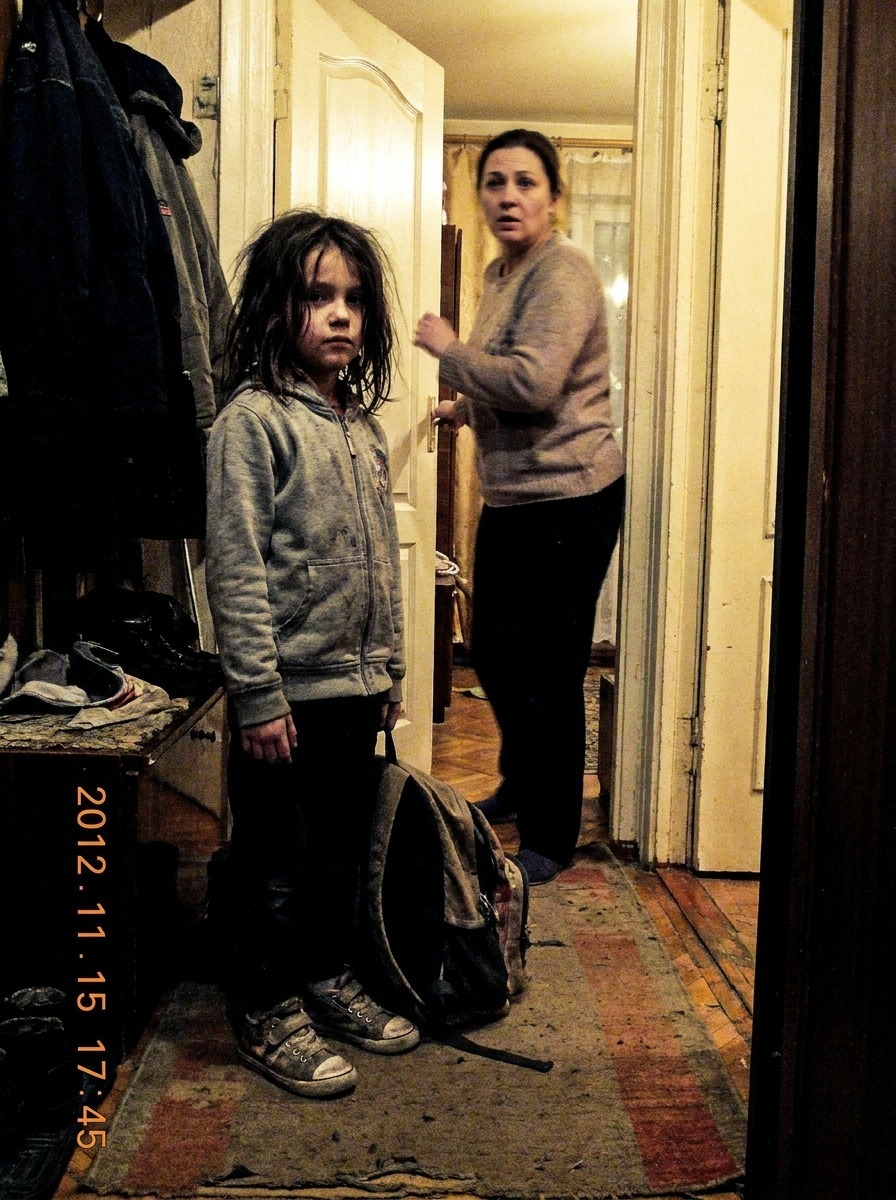
I could tell she was nervous.
She wore a clean sweater and held a folder against her chest, though I don’t think there was anything important inside it.
Sometimes we carry paper just to feel prepared.
Mrs. Harlow invited us in.
Her face softened when she saw Martina’s mother.
“I’m glad you came.”
Martina’s mother sat straight in the chair.
“I don’t want an assembly.”
Mrs. Harlow blinked.
“We weren’t planning a full assembly.”
“I don’t want a class discussion where everyone knows it’s about my daughter.”
The principal folded her hands.
“I understand your concern.”
“No,” Martina’s mother said, and her voice trembled but did not break. “I don’t think you do.”
The room went silent.
I looked at her.
Really looked.
And for the first time since I had known her, she didn’t look embarrassed.
She looked angry.
Not reckless angry.
Protective angry.
The kind of anger that has been delayed by exhaustion.
“My daughter has already had to sleep in a back seat,” she said. “She has already had to brush her teeth in public bathrooms. She has already had to pretend she wasn’t cold because she didn’t want me to feel worse.”
Mrs. Harlow’s eyes lowered.
“I’m very sorry.”
“I know you are,” Martina’s mother said. “But sorry can still turn into a spotlight if you’re not careful.”
That sentence stayed with me.
Sorry can still turn into a spotlight.
Mrs. Harlow nodded slowly.
“What would feel appropriate to you?”
Martina’s mother took a breath.
“Talk to the children about gossip. Talk about not repeating private things. Talk about how everyone has different lives outside school. But do not mention homelessness. Do not mention food. Do not mention my child.”
Mrs. Harlow wrote that down.
“Okay.”
“And if parents want to help, don’t send them to me. Don’t give them my name. Don’t let this become some project.”
The principal looked up.
“There are families who may genuinely want to support—”
“I know,” Martina’s mother said. “And I’m not ungrateful. But I am tired of needing things publicly.”
There it was.
The sentence every comfortable person needs to hear at least once.
I am tired of needing things publicly.
Mrs. Harlow sat back.
“I hear you.”
I believed she did.
Maybe not fully.
But enough.
Then Mrs. Harlow said something I didn’t expect.
“We do have a family support fund. It’s anonymous. It helps with groceries, transportation, clothing, emergency deposits. No names shared.”
Martina’s mother’s face changed.
Hope and humiliation passed over it at the same time.
That combination is hard to watch.
Because need is rarely simple.
“Is it charity?” she asked.
Mrs. Harlow hesitated.
“It’s community support.”
Martina’s mother almost smiled.
“That sounds like charity with better shoes.”
I pressed my lips together.
Mrs. Harlow did smile then, gently.
“Maybe. But it’s private.”
Private.
That word mattered.
Martina’s mother looked at me, then back at the principal.
“I’ll think about it.”
On the way out, we passed the main bulletin board.
There were construction paper leaves on it, each one with something students were thankful for.
Family.
Dogs.
Pizza.
My bed.
My bed.
I stared at that one for too long.
Because after you know what a locked door means to someone who lost one, gratitude starts looking different.
That afternoon, Ms. Bell handled it beautifully.
I only know because Lucía told me later.
She didn’t say Martina’s name.
She didn’t say homelessness.
She didn’t say poor.
She gathered the class on the rug and said, “Sometimes we learn something private about another person. Private means it belongs to them, not to us.”
Then she held up a paper heart.
“If someone gives you a secret, you do not turn it into a story.”
Lucía told me the whole class went quiet.
Even Evan.
Then Ms. Bell asked them what kindness looked like when no one was watching.
The answers were simple.
Sharing crayons.
Saving a seat.
Not laughing.
Asking if someone wants help instead of just grabbing their stuff.
Then Martina raised her hand.
Lucía said everyone turned.
Martina’s voice was small, but clear.
“Kindness is when someone doesn’t make you talk about sad stuff.”
Ms. Bell nodded.
“That’s a very wise answer.”
And then they moved on.
Just like that.
Math worksheets.
Spelling words.
Indoor recess because of rain.
No dramatic music.
No big lesson.
Sometimes the most merciful thing adults can do is move on.
For a few days, it seemed like the storm had passed.
At pickup, Martina and Lucía laughed again.
They played hopscotch near the gate.
They argued about who got to be the dragon in their game.
Normal returned in little pieces.
But then came the envelope.
It was slipped into Lucía’s backpack on a Thursday.
A white envelope.
No stamp.
No name.
I found it when I was cleaning out crushed crackers and old worksheets.
Inside was a handwritten note.
Not from a child.
From a parent.
I knew that immediately.
The handwriting was too controlled.
The words too poisoned by adult certainty.
It said:
Some parents are concerned that your daughter has been encouraged to create emotional dependency with a vulnerable child. Please consider the message you are sending. Children are not social workers.
I read it three times.
Then I sat down.
Not because the note was powerful.
Because it was cowardly.
There is a particular kind of cruelty that wears the mask of concern.
It does not shout.
It does not curse.
It says things like “some parents.”
It hides in plural.
It pretends to be a community.
But really, it is one person who wants to wound without being seen.
Lucía came into the kitchen.
“What’s that?”
I folded it quickly.
“Nothing.”
She narrowed her eyes.
Eight-year-olds are better detectives than adults give them credit for.
“Is it about me?”
I wanted to say no.
But I had already learned what happens when we protect children by lying badly.
“It’s an unkind note from someone who doesn’t understand what happened.”
Her face changed.
“About Martina?”
“About you.”
She went very still.
“What did I do?”
The question made me want to tear the note into pieces.
“You cared about your friend.”
“But that’s not bad.”
“No.”
“Then why are people mad?”
I opened my mouth.
Closed it.
How do you explain to a child that kindness can make adults uncomfortable because it reveals what they ignored?
How do you tell her that some people would rather debate the proper method of helping than face the fact that help was needed?
How do you say that goodness is rarely attacked directly?
It is usually questioned.
Managed.
Corrected.
Made smaller.
I pulled out a chair.
“Come sit with me.”
She sat.
Her legs swung above the floor.
I placed the folded note on the table but didn’t open it again.
“Some people think children should always tell adults first before helping another child.”
Lucía thought about it.
“But I did tell you.”
“Yes.”
“And you yelled.”
There it was.
Clean as glass.
I nodded.
“I did.”
She looked down.
“I wasn’t trying to be mean when I said she smelled funny.”
“I know.”
“I just didn’t know how else to say something was wrong.”
My throat tightened.
“I know that now.”
She looked up.
“Would you still yell if I said it again?”
“No.”
“Would you listen?”
“Yes.”
She studied me.
Children forgive quickly, but they do not always forget.
And maybe that is good.
Maybe parents should not be allowed to erase every mistake with one apology.
“I’m sorry,” I said. “I should have listened better.”
She nodded slowly.
Then she asked, “Did I make things worse for Martina?”
That one hurt.
“No, baby.”
“But people found out.”