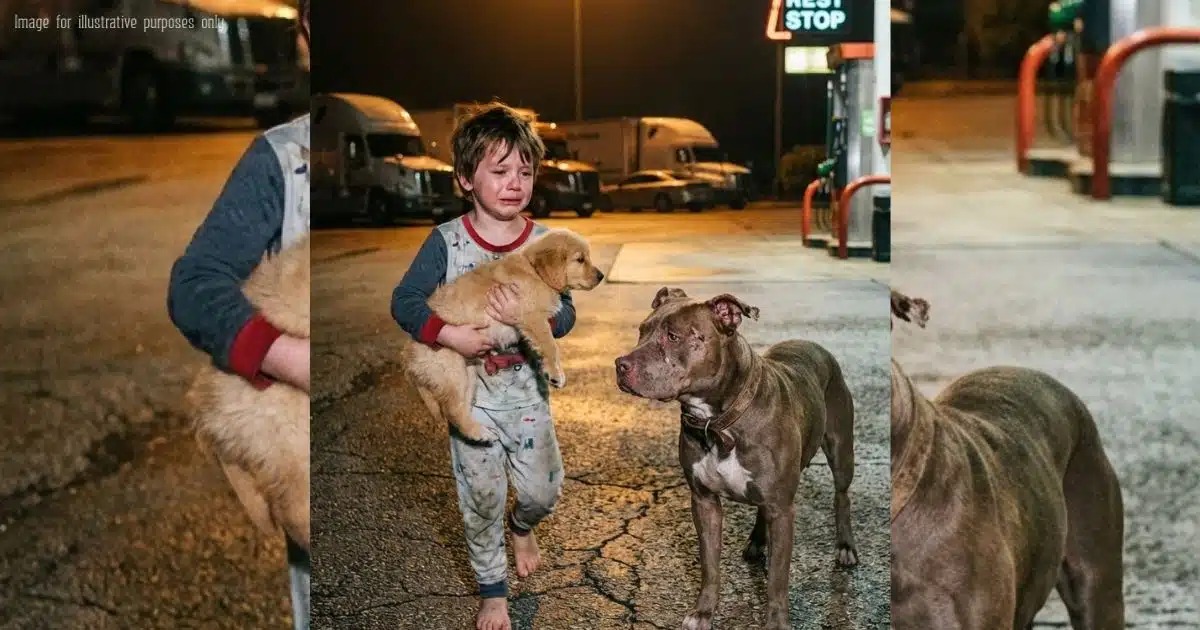
No panic.
He placed dogs by temperament, not size.
Put the elderly hound where he could see people.
Gave the bulldog the warmest crate.
Moved the shepherd mixes apart so they wouldn’t feed each other’s nerves.
Set the puppies near Hope, because Hope had turned into the world’s gentlest old aunt dog and could calm a room just by breathing in it.
Ledger was last.
He wouldn’t get out of the transport crate.
Wouldn’t take food.
Wouldn’t look at anybody except Micah.
So Micah sat down on the concrete floor outside the crate and waited.
Tank stood beside me, arms crossed.
“What’s the play here?” he asked.
“No play.”
“Sanctuary’s full. Feed’s tight. Fundraiser’s half-dead. Internet thinks we’re thugs. Roof’s still open to the sky. And rich lady just drove away with enough money to fix all of it.”
I didn’t answer.
Tank grunted.
“That’s what I thought.”
He went to help unload blankets.
Around one-thirty, when most of the worst of the intake rush was under control, the arguments started.
Not loud at first.
They rarely are.
Marlene was labeling medication bins when she said, without looking up, “Dogs don’t care where the money came from.”
Deacon, who had spent fifteen years welding kennel doors for free on weekends, looked over from the sink.
“Maybe not. People do.”
Marlene slapped a label onto a bottle.
“Hungry animals don’t eat principles.”
Deacon dried his hands on a towel.
“Maybe. But if you build mercy with blood-stained bricks, the walls stay dirty.”
Tank, never one to leave a flame un-fanned, leaned in the doorway.
“So we let these dogs pay for a dead bastard’s sins instead?”
Deacon rounded on him.
“That’s not what I said.”
“It’s what you meant.”
“No. What I meant is there’s money you take and money you don’t.”
Tank snorted.
“Easy thing to say when it’s not your ledger.”
Micah was still sitting on the floor outside Ledger’s crate.
He hadn’t joined in.
Hadn’t looked up.
Hadn’t said a word.
That told me he was listening to every single one.
Marlene capped the last medicine bottle.
“Look around,” she said. “We are one emergency away from drowning. Maybe we already had it. Maybe it drove through the gate in a black SUV.”
“Then let it drown,” Deacon said.
Even he flinched at how harsh it came out.
Marlene’s face softened.
“I get why this is hard. I do. But I’ve got six puppies in my office and a vet invoice the size of a truck payment. I can’t tell a starving dog we stayed pure.”
Tank nodded once.
“There it is.”
Deacon pointed toward Micah.
“It isn’t your call.”
“No,” Tank said. “It’s his.”
That finally made Micah lift his head.
His eyes were bloodshot with exhaustion.
There was straw in his hair.
Hope was curled beside him like an old golden comma.
Ledger was still inside the crate, still staring.
Micah looked at all of us.
Then at the row of new dogs.
Then at the half-finished roof overhead where a blue tarp snapped in the night wind.
When he spoke, his voice was flat with fatigue.
“If I take that money,” he said, “every article ever written about this place turns into a redemption story for a dead man.”
Nobody interrupted.
Micah kept going.
“People love that kind of story. Rich abuser dies, daughter donates, broken victim turns pain into purpose, everybody claps. They clean the whole thing up until it smells like forgiveness instead of what it really was.”
He stroked Hope’s back once.
“One night doesn’t go away because a check showed up fifteen years later.”
Deacon nodded slowly.
Tank didn’t.
“What if it’s not about him?” Tank asked. “What if it’s about the dogs in front of us?”
Micah laughed once.
Tired.
Sharp.
“Yeah. That’s exactly how dirty money talks.”
Nobody slept much.
At dawn, Lena came.
Micah’s mother hardly ever made surprise appearances.
She came to the sanctuary for events, medical transports, the occasional Sunday cookout when Tank fired up the smoker and pretended not to care whether anybody complimented the ribs.
But she didn’t just show up at sunrise unless something had gotten under her skin.
She parked her old pickup by the feed shed and walked in wearing jeans, boots, and a denim jacket with Hope’s hair all over one sleeve.
She looked strong.
That wasn’t an accident.
She had spent fifteen years making strength look ordinary so other women in recovery groups wouldn’t think survival had to look theatrical.
Her scars weren’t visible.
That didn’t mean they were gone.
Micah saw her and straightened.
“What happened?”
Lena glanced at me.
At Tank.
At the line of new intake kennels.
Then at the office where the printed screenshot of that viral video sat lying face down on the desk.
“She came to my house before she came here,” Lena said.
The whole room changed.
Micah’s face went still.
“She what?”
Lena leaned against the counter.
“Yesterday morning. Before the sanctuary opened.”
“You didn’t tell me.”
“I know.”
“Why?”
Her eyes met his.
“Because I didn’t want my pain making your decision for you.”
Micah stared at her like he didn’t know whether to be angry or impressed.