“What does right mean?”
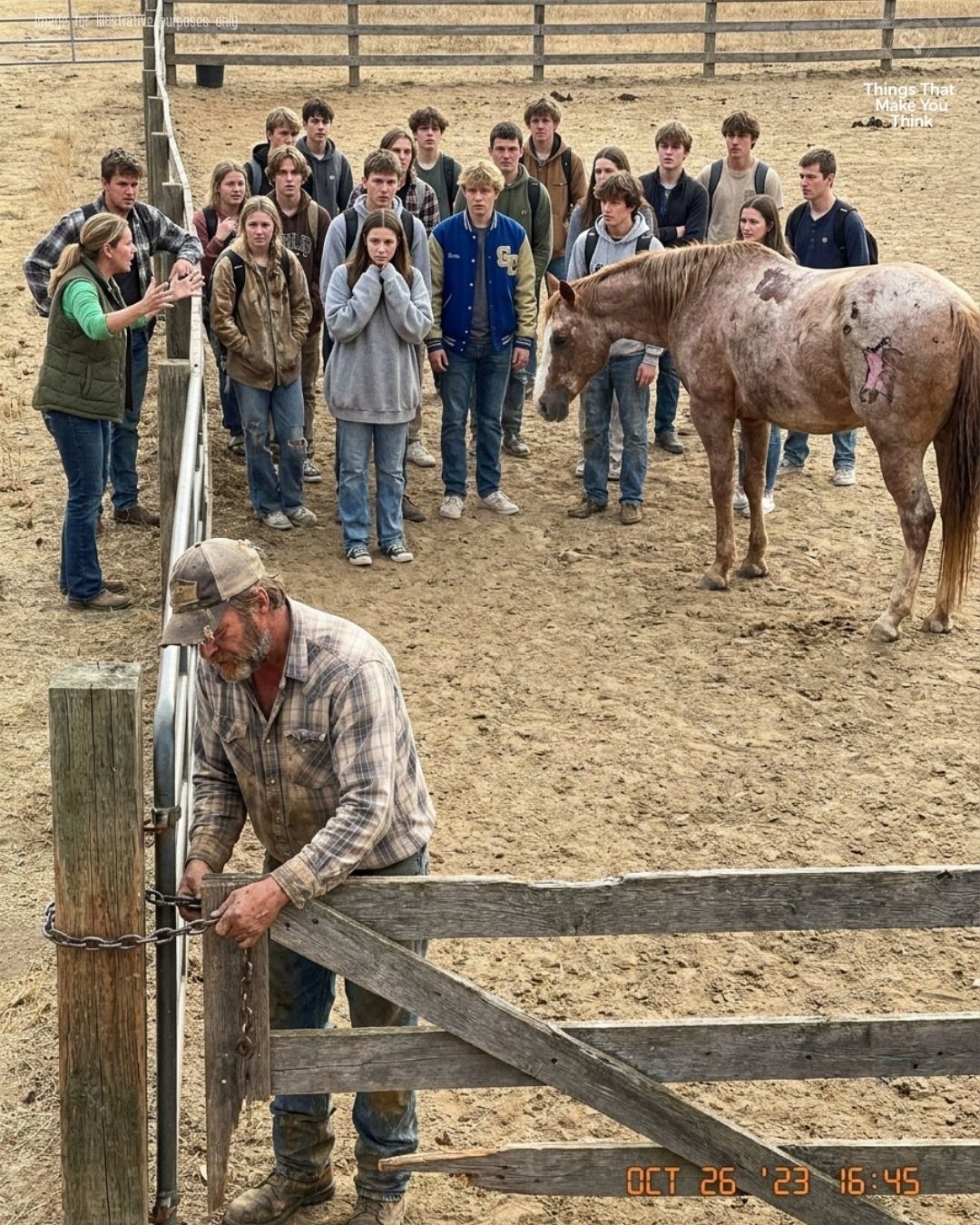
“It means parent permission. Emergency contacts. Set hours. No school transportation. No pretending this is therapy. A counselor visits once a week. Kids work, not just sit around drowning in feelings. Gates open. Adults present. Safety training before anyone touches a horse.”
“That is a lot.”
“Kids are a lot.”
He exhaled.
“I can bring it to the district.”
“I’m not asking the district to run my barn.”
“They will want oversight.”
“I figured.”
“They will want documentation.”
“I hate documentation.”
“I assumed.”
I rubbed my eyes.
“Mr. Mercer, I’m trying hard not to be stubborn just because I’m hurt.”
That changed the air between us.
His voice softened.
“So am I.”
A week later, we held the meeting in the school cafeteria.
That was Mr. Mercer’s idea.
Neutral ground, he called it.
There is nothing neutral about a school cafeteria after dark.
The fluorescent lights hum like insects.
The tables smell faintly of bleach and old fries.
Every adult sits like they are ready to be disappointed.
The students were told they could attend.
That was my condition.
If grown people were going to discuss whether the barn mattered, the kids who had been showing up there deserved to sit in the room.
Some parents came angry.
Some came confused.
Some came embarrassed, because nobody wants to discover from a community page that their child cried against a horse in the middle of a school day.
Emma sat in the back with her arms crossed.
Mason stood against the wall near the vending machines.
Mrs. Avery sat beside the school counselor, Ms. Lin, a small woman with silver-streaked hair and the calmest hands I had ever seen.
Mr. Mercer opened with careful words.
Student wellbeing.
Community partnership.
Safety concerns.
Possible pilot program.
Every phrase sounded like it had been sanded down until nobody could cut themselves on it.
Then he invited me to speak.
I stood up.
My knees hurt.
My back hurt.
My hands looked too rough under those bright lights.
“I’m not here to sell anybody a miracle,” I said.
That quieted the room faster than I expected.
“Buster is not magic. My barn is not a clinic. I am not trained to fix your children. Truth is, I couldn’t even save my own.”
A few adults shifted.
I kept going before fear could close my throat.
“But I know horses. I know broken animals. And I know that sometimes, when a kid feels like every adult wants them to explain their pain in perfect words, it helps to stand beside something that doesn’t require language.”
A woman in the front row raised her hand without waiting.
“My daughter came home crying after your demonstration.”
I nodded. “Yes, ma’am.”
“She wouldn’t tell me why.”
“I’m sorry.”
“She said the horse understood her.”
Her voice cracked on the last word.
The anger drained out of her face, and underneath it was terror.
Plain, parental terror.
“What am I supposed to do with that?” she asked.
The whole room held still.
That was the question nobody wanted to say.
Not just about my barn.
About all of it.
About every closed bedroom door.