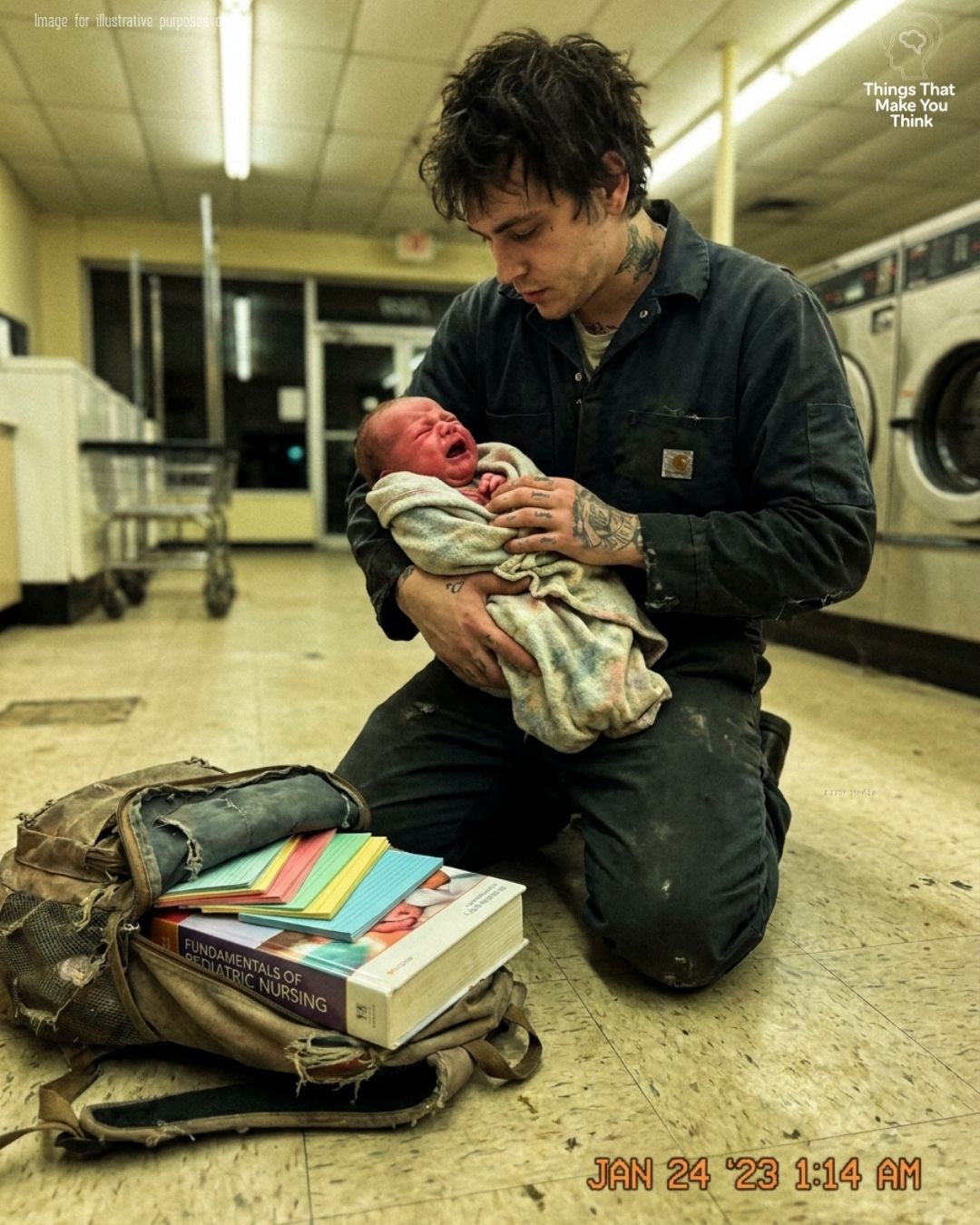
Only for a second.
But it was enough.
“I’m not asking her to love me today,” she said. “I’m asking for the chance to earn whatever place is safe for her.”
Jackson laughed once.
There was no humor in it.
“Safe?”
“I know.”
“You left her.”
“I know.”
“You left me too.”
Rachel closed her eyes.
“I know.”
The porch was silent except for Emma’s soft breathing and the old wind chimes clicking above us.
Then Rachel turned back to me.
“I’m sorry I came here,” she said. “I didn’t know where else to go.”
She picked up the envelope from the rail and placed it in Jackson’s hand.
He did not look at it.
“I’ll be at the hearing,” she said. “I won’t fight dirty. I won’t lie. I just needed you to know I’m not who I was when I left.”
Jackson’s jaw tightened.
“You don’t get to decide that.”
“No,” she said. “I guess I don’t.”
Then she walked down my porch steps.
Her small car was parked crooked at the curb.
She got in, put both hands on the steering wheel, and sat there for a long moment before driving away.
Jackson did not move until the taillights disappeared.
Then he handed Emma to me, walked into my downstairs bathroom, shut the door, and threw up.
That night, Emma slept in my guest room because Jackson could not bring himself to take her back to their apartment.
He sat at my kitchen table until after midnight, the envelope unopened in front of him.
His nursing pin was still on the counter from Sunday dinner.
A little silver symbol of everything he had survived.
Now it looked painfully small beside those legal papers.
“I should have known,” he said.
I poured him tea he did not drink.
“Known what?”
“That peace doesn’t last for people like me.”
I sat across from him.
“Don’t say that.”
He rubbed both hands over his face.
“She’s going to take her.”
“No one is taking Emma tonight.”
“You don’t know that.”
“No,” I said. “I don’t.”
He looked at me, startled.
I could have lied.
I wanted to.
I wanted to tell him no judge, no official, no person with eyes and a soul would ever separate him from that child.
But I had lived long enough to know that love and fairness do not always arrive in the same car.
So I gave him the truth instead.
“I don’t know what will happen,” I said. “But I know who you are. And I know who Emma knows as home.”
He stared at the envelope.
“I hate her.”
I nodded.
“I know.”
“I hate her for walking away.”
“Yes.”
“I hate her for getting to come back clean and rested and prepared with papers while I had to crawl through those two years on my hands and knees.”
“Yes.”
Then his voice cracked into something smaller.
“And I hate myself because a tiny part of me was glad she was alive.”
That broke my heart more than all the anger.
Because underneath every abandoned person is not only rage.
There is also the wound of having loved someone who left.
I reached across the table and covered his hand with mine.
“You’re allowed to feel all of that.”
He swallowed hard.
“What am I supposed to do?”
I wanted to answer quickly.
That was my habit as a teacher.
Give the rule.
Explain the lesson.
Move the child toward the right answer.
But life was not a classroom anymore.
And Jackson was not one of my seventh graders.
He was a father standing at the edge of a decision that would shape his daughter’s life.
So I said the only honest thing I had.
“You protect Emma,” I told him. “Not your pride. Not your anger. Not Rachel’s guilt. Emma.”
He looked away.
“What if protecting her means keeping Rachel away forever?”
“Then that’s what you do.”
He looked back at me.
“And what if protecting her means letting Rachel back in?”
I had no answer for that.
Not one that did not hurt.
The hearing was scheduled for three weeks later.
Three weeks is not long.
Unless you are waiting to find out whether your family can be rearranged by people who did not see how it was built.
Then three weeks becomes a lifetime.
Jackson became a ghost of himself.
He still went to work at the clinic.
He still packed Emma’s lunches.
He still read her the same bedtime book about a lost duck finding its pond.
But he moved through each day with a tightness in his shoulders that never left.
Emma noticed.
Children always notice.
Adults pretend they hide pain from children.
We do not.
We simply teach them to guess around it.
One morning, while I brushed Emma’s hair before preschool, she looked at me in the mirror.
“Nana?”
“Yes, love?”
“Is Daddy mad at me?”
My hand stopped mid-brush.
“No, baby. Never.”
“He looks sad when I laugh.”
That sentence nearly split me open.
I turned her around and took both her little hands.
“Daddy is not sad because of you,” I said. “Daddy is sad because grown-up things are heavy sometimes.”
She frowned.
“Can I help carry?”
I pulled her into my arms.
“You already do.”
The next Sunday, Jackson told me he had spoken to a legal aid counselor.
I was relieved.
Then he told me what the counselor had said.
“She said the court may consider gradual visitation,” he said. “Because Rachel is the biological mother and there are no reports of her hurting Emma.”
I bristled at that.
“Leaving is hurting.”
“I said that.”
“What did the counselor say?”
Jackson stared at his coffee.
“She said the court looks at whether a relationship can be safe now, not only whether someone failed before.”
I did not like that.
Not because it was unreasonable.
Because it was.
And reasonable things can still feel cruel when your heart is on trial.
“She also said if I refuse everything, I could look like I’m punishing Rachel instead of protecting Emma.”
He looked at me.