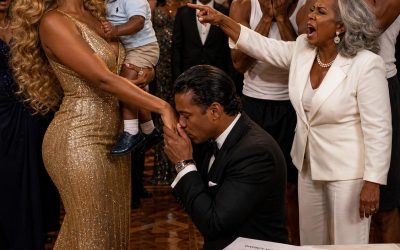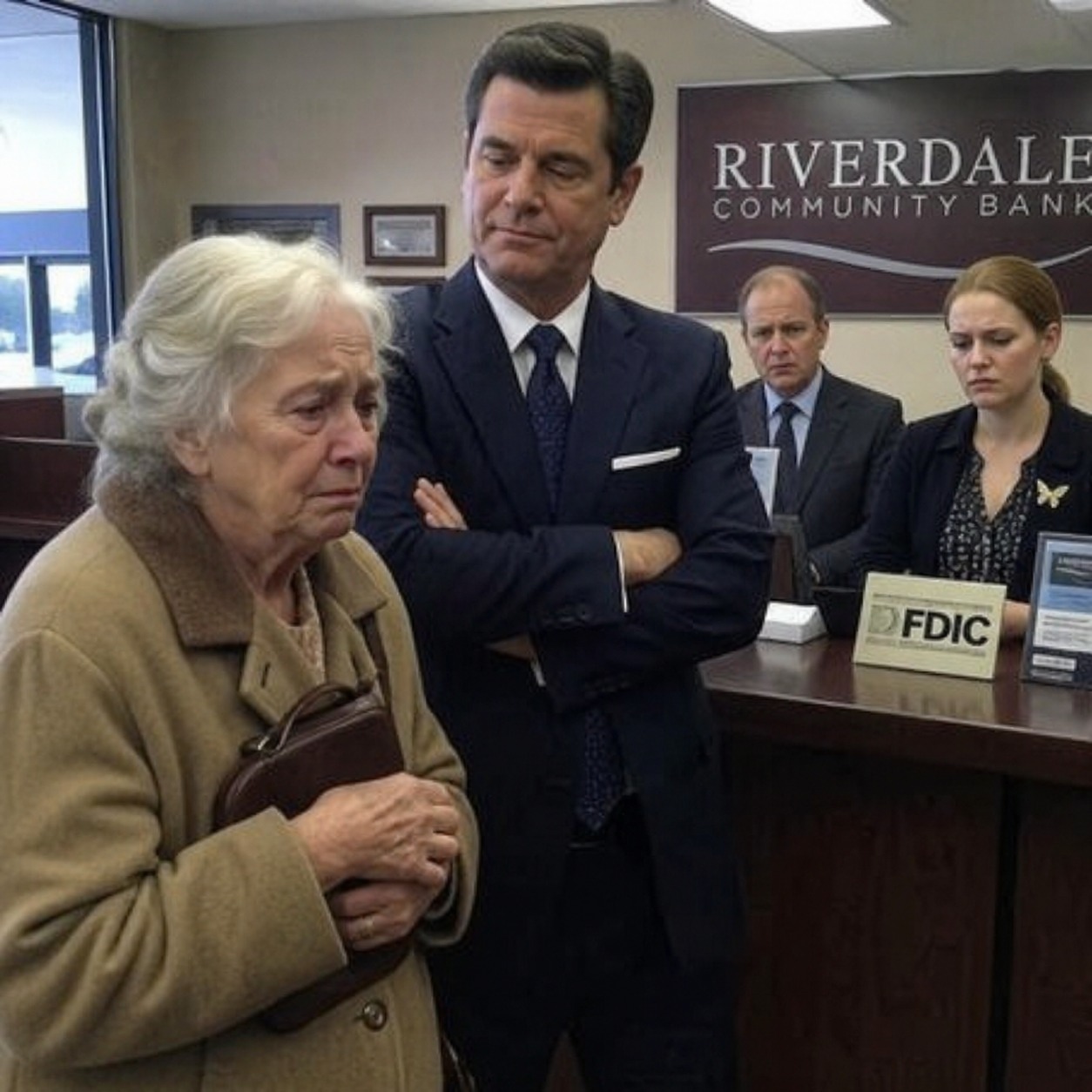
“Am I going to jail?”
Beth made a sound.
Daniel did not smile.
“That decision is not mine alone. But I will make sure the full circumstances are documented.”
I nodded.
“I understand.”
He hesitated.
Then he said, “You saved me once.”
I shook my head.
“No. I fed you pancakes and made you do homework.”
“You stood in front of a judge and said I was not a lost cause.”
I remembered that.
A hearing in a dull room.
Danny hunched in a chair.
A man with papers calling him unmanageable.
Me standing up so fast my purse fell over.
“He is not a lost cause,” I had said.
Frank squeezed my hand under the table afterward.
Daniel looked at me now, forty years later.
“I built a life on that sentence.”
My eyes blurred.
“Oh, Danny.”
“So tonight,” he said, voice low, “let someone stand in front of you.”
Then he left.
Beth and I went inside.
For a long time, neither of us spoke.
The condo felt too quiet.
Finally Beth set my purse on the table.
“Mom.”
“I know.”
“That was the wildest thing you have ever done.”
“I once drove to Cincinnati with your father because he heard about a piano sale.”
“Not comparable.”
“We got lost for six hours.”
“Still not comparable.”
I laughed.
Then she did.
Then we both cried.
The investigation did not end in a day.
Nothing real does.
It unfolded like a quilt being taken apart stitch by stitch.
Daniel did not personally handle everything after that, but he made sure the right people looked.
The police union had a legal support group for officer families and community cases, and through a senior protection partnership, they connected Beth with people who knew what papers mattered.
Forensic accountants reviewed the transfers.
A handwriting specialist examined the signatures.
The notary stamp led to a woman who admitted she had notarized documents she did not witness because she trusted a “professional contact.”
The mailing address change had been submitted from Grant’s office.
My phone records showed unanswered calls from the bank on days Grant claimed I had approved transfers.
My primary doctor wrote a simple letter stating I had not been diagnosed with anything that would support Grant’s claim that I could not manage ordinary decisions.
Again and again, the paper told the truth.
Grant’s company collapsed in less than two weeks.
Not dramatically.
No screaming headlines.
Just quiet emails.
Paused funding.
Resigned advisors.
Locked accounts.
People carrying boxes to cars.
The way false things often end.
Not with thunder.
With paperwork.
Grant called me once after that.
Beth was with me when the phone rang.
I put it on speaker.
For a moment, all we heard was his breathing.
Then he said, “Mom.”
I closed my eyes.
“Grant.”
“They froze everything.”
I said nothing.
“My accounts. The company accounts. Everything.”
Beth’s jaw tightened, but she stayed quiet.
“Mom, I need you to tell them you misunderstood.”
“No.”
“I could go to prison.”
The word hung there.
Heavy.
Terrible.
Not something I wanted.
Not for anyone.
Not even him.
“I don’t decide that,” I said.
“You could help me.”
“I tried helping you for fifty years.”
“This is different.”
“Yes,” I said. “This time helping you means telling the truth.”
His voice broke then.
Not elegantly.
Not in a way that fixed anything.
Just broke.
“I was so close.”
“To what?”
“To proving I wasn’t small.”
I opened my eyes.
There it was.
The wound under the wound.
The little boy who heard “be responsible” as “be ordinary.”
The man who mistook quiet dignity for failure.
“Grant,” I said softly, “your father was not small.”
Silence.
I kept going.
“The life we gave you was not small. Your sister’s life is not small. Mine is not small.”
He said nothing.
“You made our love feel like something you had to escape.”
His breathing shook.
“I don’t know how to fix this.”
“You start by not asking me to lie.”
A long pause.
Then, barely audible, “I’m sorry.”
I wanted to grab those words.
I wanted to hold them under a lamp and see if they were real.
But apologies, like checks, can bounce.
“I hope someday you understand what you’re sorry for,” I said.
Then I ended the call.
Beth looked at me.
“That was strong.”
“No,” I said. “That was tired.”
She reached across the table and took my hand.
“Sometimes tired is stronger.”
Three months later, my accounts were restored.
Not all at once.
Not neatly.
But enough.
The first time I walked back into Pine Hollow Savings, Jenna cried before I did.
Mr. Mallory came out from his office and shook my hand with both of his.
“Mrs. Whitaker,” he said, “we’ve updated our internal procedures.”
“I hope so.”
His ears went red.
“Yes, ma’am.”
I withdrew eight hundred dollars.
Then five hundred more.
Then one hundred.
Not because I needed it.
Because I could.
I put the cash in my purse and sat in the Buick for ten minutes afterward, laughing until tears ran down my face.
Beth took me to the diner for pancakes.
We sat in the booth Frank liked, the one by the wall with the framed picture of the old train depot.
Beth poured too much syrup.
I pretended not to notice.
“What will you do now?” she asked.
“With what?”
“Everything.”
I looked out the window.
A man helped his wife step carefully over a patch of ice.
A teenage waitress taped a sign in the window crooked, then stepped back and tilted her head.
A little boy in a red jacket pressed his nose to the pastry case.
Life going on.
Unimpressed by our disasters.
“I don’t know,” I said.
“Good.”
“Good?”
“Means Grant doesn’t either.”