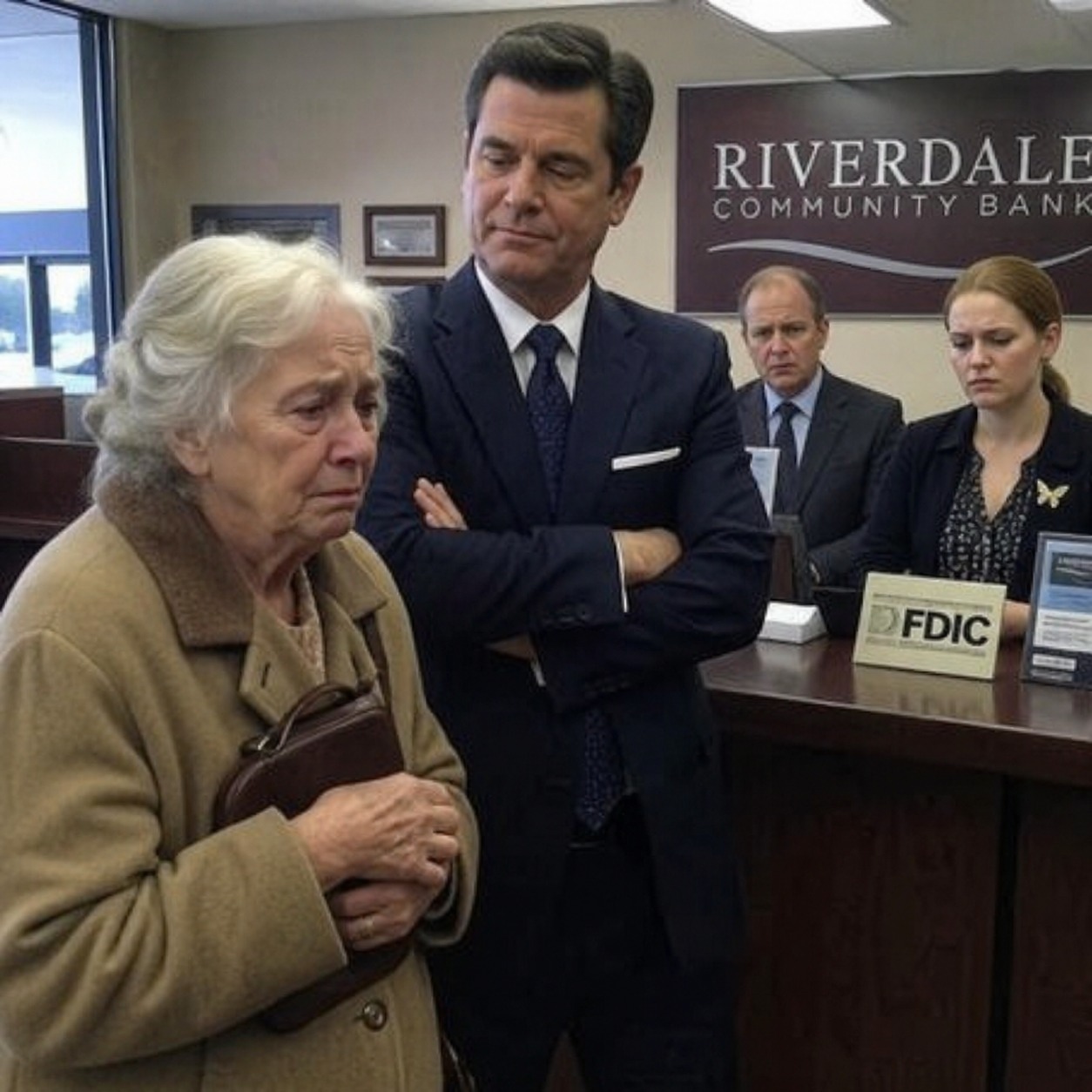
“No.”
“Mom.”
“No.”
“I can make this much harder.”
My throat tightened.
There it was.
No more soup.
No more Dad.
No more concern.
Just the truth standing in plain clothes.
“You already have,” I said.
Then I hung up.
I drove home with the folder on the passenger seat.
The Buick rattled over every dip in the road.
Frank used to call her “Big Blue,” though she had faded to the color of washed-out denim.
The driver’s seat still held the shape of his body more than mine.
There was a butterscotch candy in the ashtray even though neither of us had smoked.
There was an old gas receipt from 2009 tucked behind the visor.
That car was not just a car.
It was the last place I could still hear Frank say, “You want me to drive, Ellie?”
I parked in front of Maple Grove Senior Villas, where every condo had beige siding, white shutters, and a front porch just big enough for two rocking chairs and a plant you forgot to water.
Mrs. Kinney from 3B was out front with her little white dog.
She lifted a hand.
I lifted mine back.
I did not tell her I had fourteen dollars in cash.
I did not tell her my checking account was locked.
I did not tell her my rent notice sat on the kitchen table under a magnet shaped like a strawberry.
Pride is a strange little animal.
It will sit beside you while your house burns down and whisper, “At least don’t let the neighbors see.”
Inside, my condo smelled like lemon cleaner and old coffee.
I put the folder on the kitchen table.
Then I sat down across from it like it might speak first.
It did not.
So I called my daughter.
Her name is Beth.
I had not called her in three months.
She had not called me in seven.
That was how we measured love in our family by then.
Gaps.
Stretches of silence.
Little tests no one admitted were tests.
Beth answered on the fifth ring.
“Mom?”
Her voice made my eyes sting immediately.
“Hello, honey.”
“What’s wrong?”
There it was.
A daughter knows.
Even after years of hurt.
Even through a phone line.
Even when she swears she is done caring first.
“I need to ask you something,” I said.
“Okay.”
“If your brother told you I was confused, would you believe him?”
Silence.
Then a kitchen sound.
A cabinet door closing maybe.
“Mom,” she said slowly, “what happened?”
So I told her.
Not all of it well.
Some parts twice.
Some parts backward.
I told her about the bank.
The power of attorney.
The transfers.
The rent.
Grant’s phone call.
When I finished, Beth did not speak for a long time.
Then she said, “I knew something was wrong.”
My hand tightened around the receiver.
“What do you mean?”
“He called me two months ago.”
“He did?”
“He said you were declining. That you were making poor decisions. That you had become suspicious and emotional.”
I laughed, but it came out like a crack.
“I suppose I was supposed to be cheerful while being robbed.”
“Mom.”
There was pain in her voice.
And under it, anger.
Not at me this time.
At least not only at me.
“He asked me to sign something,” she said.
“What?”
“A letter. Just a family statement that he was the best person to manage things. He said it was for the estate.”
My mouth went dry.
“Did you?”
“No.”
I closed my eyes.
“Thank God.”
“I almost did.”
That hurt more than I expected.
“Why?”
“Because I was still mad at you.”
The truth sat between us.
Old and heavy.
Thirteen years ago, after Frank’s retirement party, Beth had told me Grant had borrowed money from her and never paid it back.
She said he lied about why he needed it.
She said I always protected him.
I told her she was being harsh.
She told me I had spent her whole life asking her to be the bigger person because Grant was “sensitive.”
I said things a mother should never say.
She left before dessert.
Frank tried to fix it.
I tried to wait her out.
Beth built a life in another town with her husband, her grown stepson, her church, and her garden club.
We exchanged birthday cards and careful holiday texts.
Nothing more.
“I’m sorry,” I said.
The words were too small.
They always are, when they finally arrive years late.