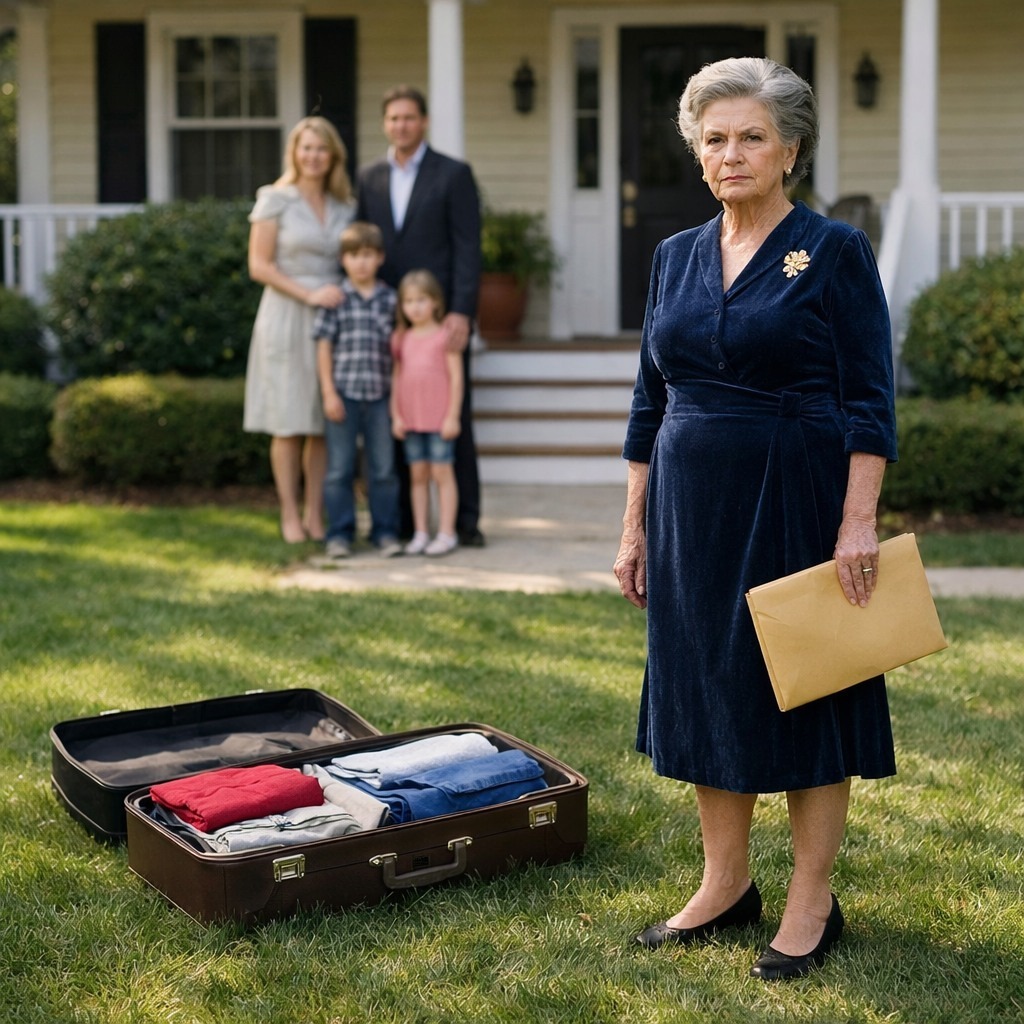
I didn’t look back again.
Because I didn’t want my last memory of that place to be their faces.
I moved into a small studio across town.
Worn carpet. One window facing a brick wall. The light came in reluctantly, as if even the sun didn’t want to linger there.
The first night I sat on the floor with my back against the wall and listened to the building settle around me—pipes, footsteps, distant TV noise. It wasn’t luxurious. It wasn’t quiet.
But it was mine.
I took a job at a community clinic.
The pay was low. The work was honest. People didn’t care who I’d married. They didn’t care about Harrington money. They called me by my name, and in that simple fact I found a kind of relief that surprised me.
The money stayed untouched.
Locked behind trusts Oliver’s lawyer had designed carefully—silent, secure, unreachably precise.
Nearly half a billion dollars.
And I rode the bus.
Grief doesn’t respond to wealth.
It doesn’t soften because you can buy better furniture. It doesn’t lighten because your bank account has more zeros. If anything, money makes grief feel sharper sometimes, because it highlights how little control you truly have. You can buy everything except the one person you want back.
I thought the Harringtons would disappear from my life after the eviction.
I was wrong.
Three weeks later, Lydia called.
Her voice was sweet.