The intent wasn’t.
“You took Mom’s jewelry,” she said, like she was accusing me of stealing a crown.
“I took what Oliver gave me,” I replied.
“Don’t make this harder,” Lydia purred.
“It already is,” I said.
A letter followed, hinting at theft.
I returned the necklace anyway—receipts included—because I refused to let them write a narrative where I was a criminal.
Days later, Lydia posted a photo wearing it.
Caption: Family things stay with family.
The comments were vicious.
Not toward her.
Toward me.
“Gold digger.”
“Good riddance.”
“Hope she gets nothing.”
Margaret called my workplace pretending concern, suggesting I was unstable. My supervisor pulled me aside and said gently, “Ignore it. We know you.”
I cried in the supply closet afterward—not from fear, but from how thoroughly I was being erased.
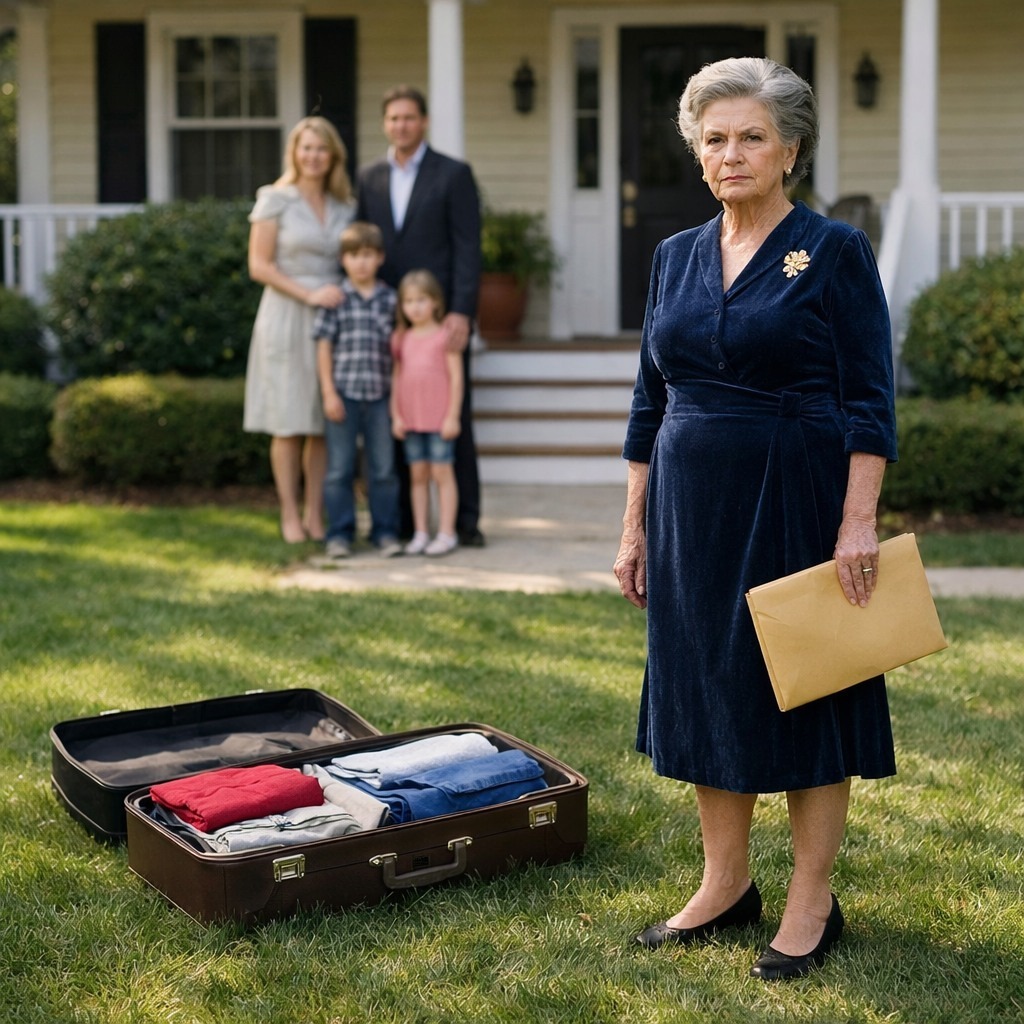
Edward sent a formal request that I stop using the Harrington name.
I framed it.
Not because it was funny.
Because it was proof.
Proof of how they wanted me to disappear.
Lydia turned my pain into content.
Screenshots. Captions. Mockery.
I kept everything.
Every call log. Every letter. Every post. Every voicemail.
Because Oliver’s warning echoed in my head:
They’ll show you exactly who they are when I’m gone.
They were showing me.
And I was collecting it.
Six months after Oliver died, grief stopped feeling like a tidal wave and started feeling like weather.
Some days it rolled in so heavy I could barely lift my arms. Other days it stayed distant, like a storm line you could see but not touch. I learned not to trust the calm days. I learned not to fear the hard ones. Grief wasn’t a problem to solve—it was a companion that changed shape.
I worked at the community clinic because it gave my days a structure that didn’t care about my last name. Patients came in with real problems: blood pressure, infections, untreated pain, exhausted single parents who hadn’t slept in weeks. The work was honest. The pay was low. I rode the bus with my scrubs folded in my tote bag, the brick wall outside my studio window catching thin morning light.
Nearly half a billion dollars sat behind trusts so tight they felt like myth.
And still, I cried over a chipped mug.