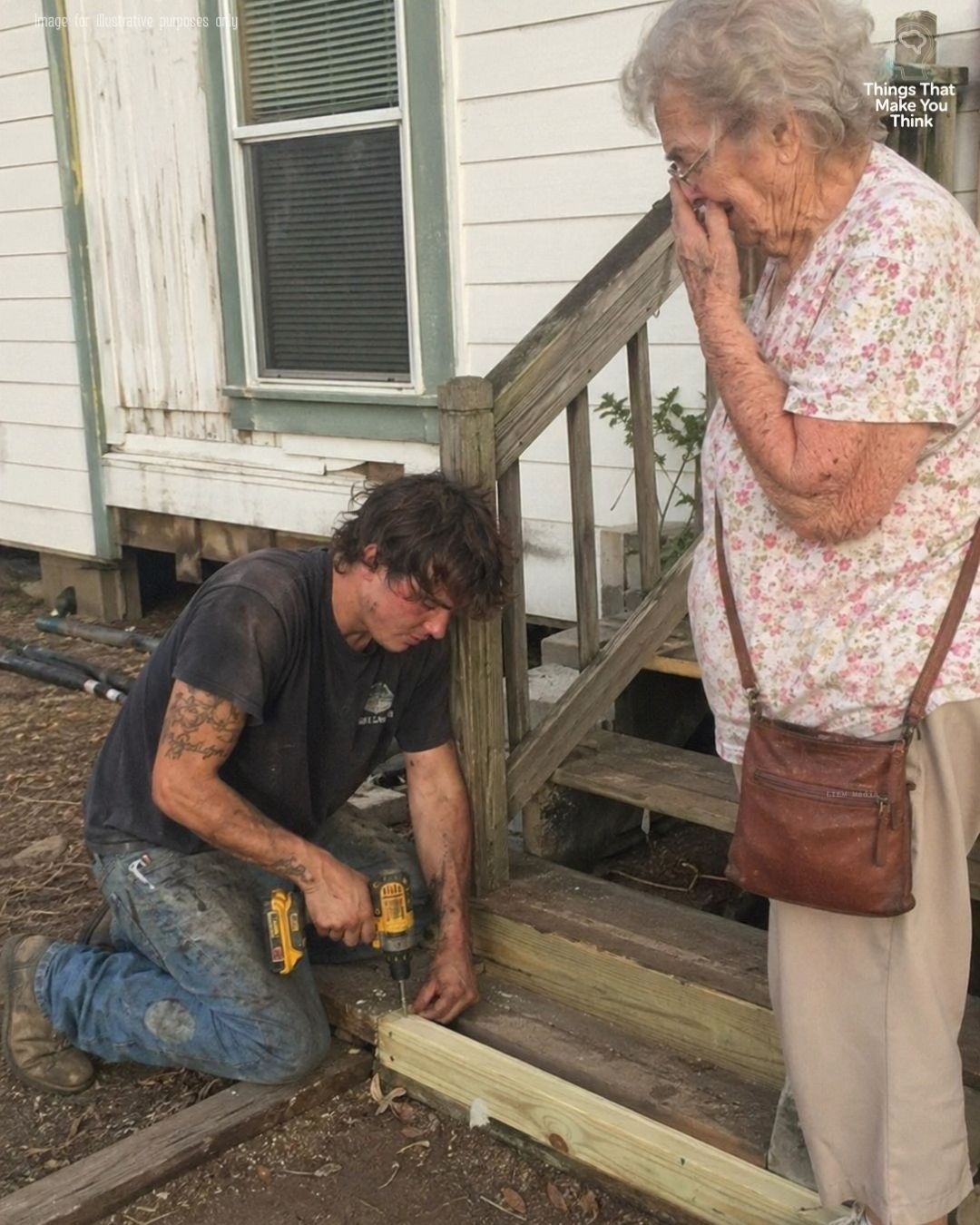
“Leo, you helped people repair their homes. Let people help you build a future.”
That was the hardest kind of help to accept.
The kind that says you might be worth more than surviving.
We argued for two days.
Margaret won.
She usually did.
Project Arthur held a community dinner in Mrs. Delaney’s backyard.
No speeches, I was promised.
There were speeches.
Mr. Harlan stood up with a paper plate in one hand.
“Leo,” he said, “your car remains an auditory burden.”
Everyone laughed.
I rolled my eyes.
“But,” he continued, “your work ethic is respectable. Your character is evident. And your measurements have improved.”
“That’s beautiful,” Mrs. Delaney whispered.
“It is factual,” he said.
Then he handed me an envelope.
Inside was enough money for my first semester.
Not all of it from neighbors.
Some from small repair jobs people insisted on paying for.
Some from a tool raffle.
Some from Margaret, though she denied it and hid behind a potato salad container.
I tried to speak.
Nothing came out.
My mom cried openly.
Margaret did not cry.
She looked proud.
That was worse.
I started classes three weeks later.
Three nights a week after work.
I was exhausted.
I was also alive in a way I hadn’t felt before.
I learned codes.
Real ones.
Load limits.
Fasteners.
Waterproofing.
Safe repairs.
The difference between helping and knowing.
I learned that good intentions matter.
But skill matters too.
That was another uncomfortable truth.
The compliance board had been cold.
But not entirely wrong.
A bad repair can hurt someone.
A kind mistake can still be a mistake.
That did not make kindness dangerous.
It made learning necessary.
I told Margaret that after class one night.
She listened carefully.
Then said, “So everyone was partly right and partly insufferable.”
“Pretty much.”
She nodded.
“That is usually how life works.”
By winter, I had changed.
Not in some dramatic movie way.
I still had tattoos.
Still had the car.
Still had bad mornings.
Still burned toast.
Still got defensive when people looked at me too long.
But I stood differently.
Like maybe I had a place in the world that wasn’t just borrowed.
Margaret changed too.
She started hosting Sunday coffee on her porch after church hours.
Not religious.
Not formal.
Just coffee.
Sometimes six people came.
Sometimes twenty.
Teenagers came for cookies.
Older neighbors came for gossip they pretended was “updates.”
My mom came when she wasn’t working.
Claire visited once a month.
Margaret even joined the neighborhood message group again.
Her first post was:
Does anyone have a good recipe for lemon cake that does not taste like wet carpet?
It got forty-three replies.
Mrs. Delaney was offended for a week.
Everything felt steady.
Then Margaret fell.
Not on the porch.
Not on the step.
In her kitchen.
She turned too fast while carrying a laundry basket and slipped.
Claire called me from the road, panicked.
The neighbor who found Margaret had called emergency services.
I met them at the hospital.
A generic city hospital with beige walls and tired chairs.
No real names matter here.
Only the feeling does.
Margaret had fractured her wrist and bruised her hip.
Nothing life-ending.
But enough to scare everyone.
When I walked into her room, she looked furious.
That was how I knew she was okay.
“If you say one word about laundry baskets,” she warned, “I will throw this pudding at you.”
I sat beside her bed.
“I wasn’t going to.”
“You were thinking it.”
“Yes.”
She sighed.
“I hate this.”
“I know.”
“I hate being old.”
I had never heard her say that before.
Not once.
She looked out the window.
“People think aging makes you gentle. It doesn’t. Sometimes it makes you angry. Your body becomes a house where the stairs keep moving.”
I swallowed.
“That’s a good line.”
“Don’t writer me right now.”
“Yes, ma’am.”
Her eyes filled.
“I’m afraid Claire will want me to move.”