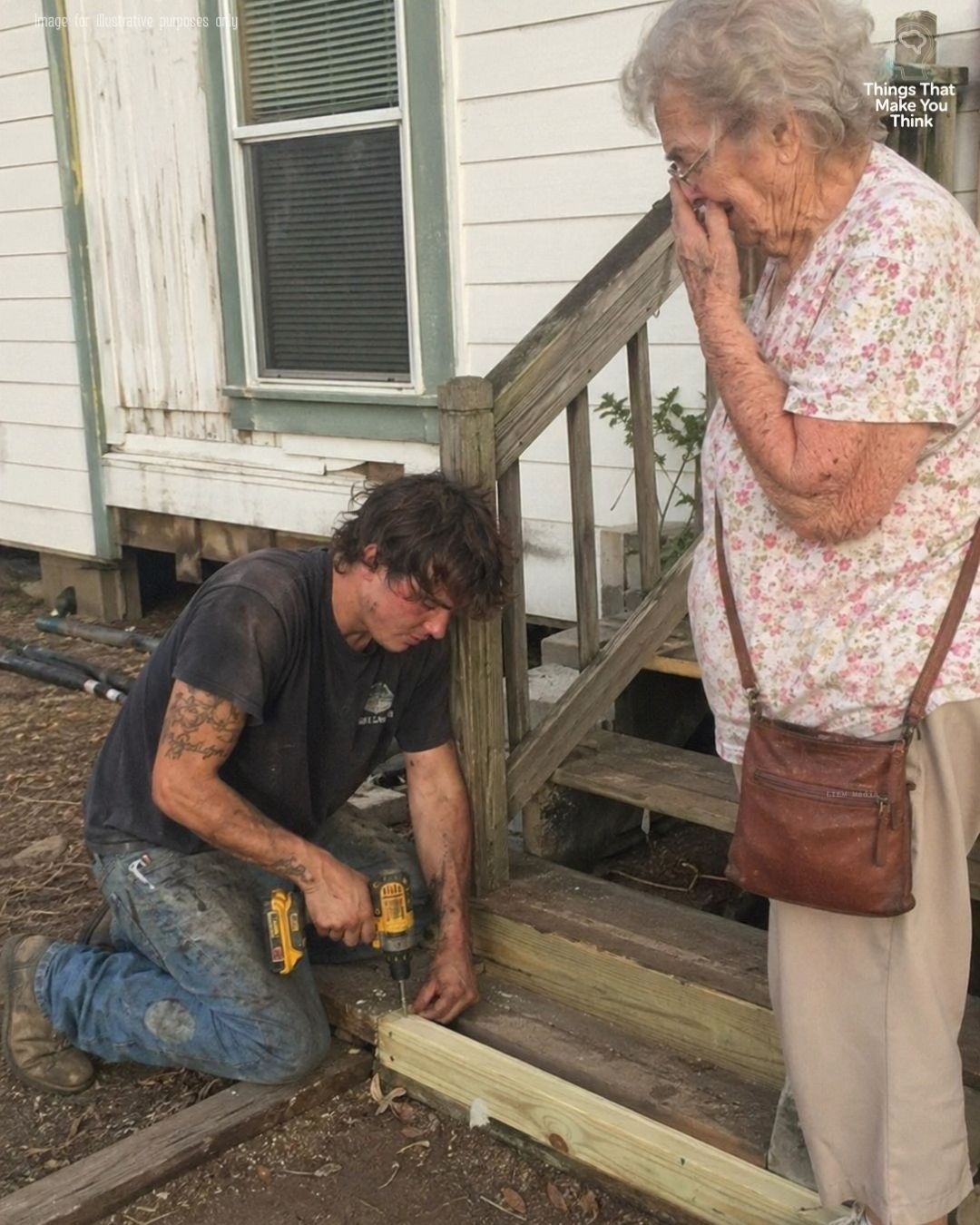
There it was.
The real injury.
Not the wrist.
Not the hip.
The fear of losing her home.
Claire did bring it up.
Not cruelly.
Not selfishly.
With love.
That made it harder.
“Mom,” she said that evening, “you can’t keep pretending nothing has changed.”
Margaret’s face closed.
“I am not pretending.”
“You fell.”
“People fall.”
“You’re eighty-two.”
“I was aware.”
Claire took a breath.
“I’m not trying to take your life away.”
“It feels exactly like that.”
I stood near the door, wishing I could become wallpaper.
Claire looked at me.
“Leo, tell her.”
“No,” Margaret snapped.
Claire’s eyes flashed.
“You listen to him more than me.”
“That is not fair.”
“No,” Claire said, voice breaking. “None of this is fair.”
The room went silent.
Claire sat down hard in the chair.
“I live six hours away,” she said. “Every time the phone rings, I think it’s the call. I have a family, a job, bills, and I am trying to be a good daughter from a highway away.”
Margaret’s anger softened.
Just a little.
Claire wiped her face.
“I don’t want to control you. I want to stop being terrified.”
That was the hardest dilemma of all.
Independence or safety.
Dignity or protection.
Home or supervision.
There was no villain in that room.
Just two women who loved each other from opposite sides of fear.
Margaret looked at me.
This time, I didn’t dodge.
“I think,” I said slowly, “you both need to stop deciding alone.”
They stared at me.
I regretted speaking.
But it was too late.
“Margaret, you can’t just say ‘I’m fine’ when you’re not. That leaves Claire guessing.”
Margaret looked away.
“And Claire,” I continued, “you can’t treat every accident like proof she can’t live her life.”
Claire nodded, crying silently.
“She needs help,” I said. “Not a takeover.”
Margaret looked back at me.
“That sounded very adult,” she said.
“I hated it.”
A care plan came together over the next week.
Not perfect.
But real.
Grab bars.
Better lighting.
A lighter laundry basket.
A neighbor check-in schedule Margaret approved herself.
Claire would visit more often, but not ambush her.
Margaret would carry her phone in her pocket.
She hated that part.
Project Arthur volunteers built a safer back step under professional supervision.
I helped, but this time we filed every form first.
Clipboard Man approved it.
I wanted to frame that approval out of spite.
Margaret told me not to become petty.
Then asked for a copy.
Spring came.
The oak trees turned full and green.
Margaret’s wrist healed crooked but functional.
She complained about it daily.
Project Arthur grew beyond Rosebend Lane.
Not huge.
Not famous.
Just useful.
Other streets copied it.
A retired teacher started one on her block.
A mechanic helped organize one near the old water tower.
A group of teenagers painted porch rails for seniors who kept trying to pay them in banana bread.
Marcus, the boy who came because his scary mom forced him, started applying to trade programs too.
He told me this while pretending not to care.
I pretended not to notice he cared.
That’s the code.
One year after I fixed Margaret’s porch step, she threw a party.
She called it a “small gathering.”
Margaret’s small gathering involved three folding tables, two dozen chairs, four cakes, a cooler of lemonade, and Mr. Harlan arguing with a teenager about proper extension cord storage.
The porch was full.
The yard was full.
The street was full of parked cars.
My old sedan sat in the driveway, newly repaired with a quieter muffler.
Not silent.
Never silent.
Just less likely to wake Arthur.
Margaret stood on the porch step.
The first step.
Our step.
Someone tapped a glass with a spoon.
Margaret glared.
“I did not ask for speeches.”
“You’re giving one,” Mrs. Delaney said.
“That is different.”
Everyone laughed.
Margaret unfolded a piece of paper.
Her hands still shook a little.
But not like that first day at the hardware store.
Not with shame.
With life.
“One year ago,” she began, “I was fifteen dollars short at a checkout counter.”
I looked down.
My mom squeezed my shoulder.
“I thought that was the humiliation,” Margaret said. “Being short. Being old. Being seen failing at something my husband used to do with ease.”
She paused.
“But I was wrong. The humiliation was not needing help. The humiliation was believing I no longer deserved it.”
The yard went quiet.
“Then a young man I had judged unfairly followed me home and repaired one broken step.”
She looked at me.
“And somehow, that step became a door.”
I swallowed hard.
Margaret continued.
“We have argued this year. About rules. About safety. About pride. About when help becomes interference and when concern becomes control.”
Claire laughed softly through tears.
Margaret smiled.
“We have not answered every question. But we have learned to ask better ones.”
She lifted Arthur’s old note, now copied onto clean paper.
“Measure twice. Cut once. Tell the truth. Fix what you can. Ask for help with what you can’t. And never leave a neighbor standing alone with a broken step.”
Nobody spoke for a moment.
Then Mr. Harlan cleared his throat very loudly.
Which meant he was emotional and furious about it.