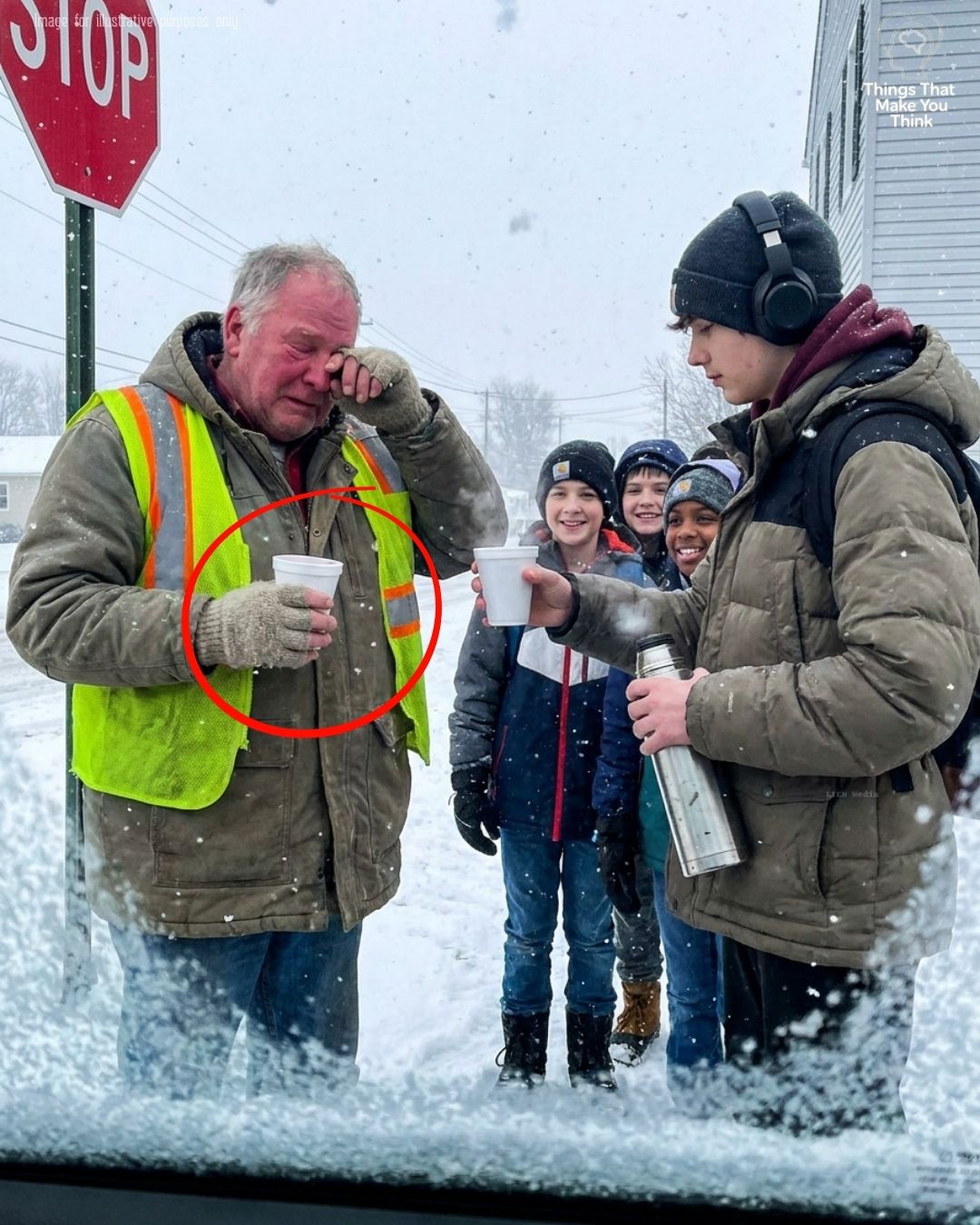
Then his phone rang.
It was Mrs. Harlan.
“Arthur,” she said, “are you sitting down?”
His stomach dropped.
“Am I fired?”
“No.”
“Oh.”
“There’s going to be a town meeting tomorrow night.”
Arthur closed his eyes.
“About the cocoa.”
“About more than cocoa.”
He was quiet.
Mrs. Harlan continued.
“Parents are upset. The district is nervous. The city wants a clean solution. And the kids want to speak.”
Arthur opened his eyes.
“The kids?”
“Leo asked for three minutes.”
Arthur felt a strange mix of pride and terror.
“Did you give it to him?”
“I gave him two.”
Despite everything, Arthur almost smiled.
“He’ll use five.”
“I know.”
The meeting was held in the middle school gym.
By 6:30 the next evening, the bleachers were full.
Parents in work uniforms.
Grandparents in winter coats.
Teachers clutching paper cups of coffee.
City staff in dark jackets.
Students gathered in clusters, whispering and nudging each other.
At the front of the room sat a long folding table with microphones.
Arthur hated microphones.
He had spent his life avoiding rooms where people stared at him.
But Mrs. Harlan had asked him to sit near the front.
So he did.
Leo sat three rows behind him with his mother and sisters.
Arthur had never met Leo’s mother before.
She looked younger than he expected and older than she should have.
Her hair was tied back carelessly.
Her eyes were tired but sharp.
When Leo’s youngest sister dropped a mitten, she caught it without looking.
A mother’s reflex.
Arthur turned and gave her a small nod.
She nodded back.
Not warm.
Not rude.
Just wary.
Like life had taught her that kindness often came with a bill.
The meeting began with Mr. Carver.
He used phrases like risk exposure, administrative responsibility, and scalable protocol.
People shifted in their seats.
Then Ms. Bellamy spoke.
Her hands trembled slightly as she explained allergies, temperature control, sanitation, and consent.
She did not sound cold.
She sounded scared.
That changed the room.
A father stood during public comment and said, “My daughter can’t have certain ingredients. I need to know what she’s drinking.”
A grandmother stood next.
“My grandson didn’t get cocoa because his mama works nights and didn’t see the paper. He already feels different enough.”
A teacher stood.
“Every year, the same kids miss forms. It’s not neglect. It’s overload.”
A nurse stood.
“Good intentions don’t cancel medical risk.”
A cafeteria worker stood.
“Then make it safe without making kids stand in a separate shame line.”
The room murmured.
Arthur stared at his hands.
He wished Ellen were there.
She would have known when to speak.
She would have known when to shut up.
Then Mrs. Harlan called Leo’s name.
The gym quieted.
Leo walked to the microphone with a folded piece of notebook paper in his hand.
He looked smaller up there.
Not weak.
Just fourteen.
His beanie was gone, and his dark hair stuck up in one place like he had run his hands through it too many times.
He unfolded the paper.
Then he looked at Arthur.
And folded it back up.
“I was going to read something,” Leo said. “But it sounded fake.”
A few people chuckled nervously.
Leo gripped the microphone stand.
“I get why people are scared about allergies. I really do. My little sister can’t eat certain stuff, and my mom checks labels like she’s studying for court.”
His mother’s face changed.
Just slightly.
“But I also know what it feels like when your house is so busy surviving that a paper doesn’t get signed.”
The gym went still.
Leo swallowed.
“And when you’re the kid whose paper isn’t signed, adults don’t see the whole story. They just see the missing form.”
Arthur felt his throat tighten.
Leo continued.
“They don’t see your mom sleeping in her work clothes. They don’t see you making cereal for your sisters. They don’t see the bill on the fridge or the car that won’t start or the backpack that smells like old snow.”
His mother looked down.